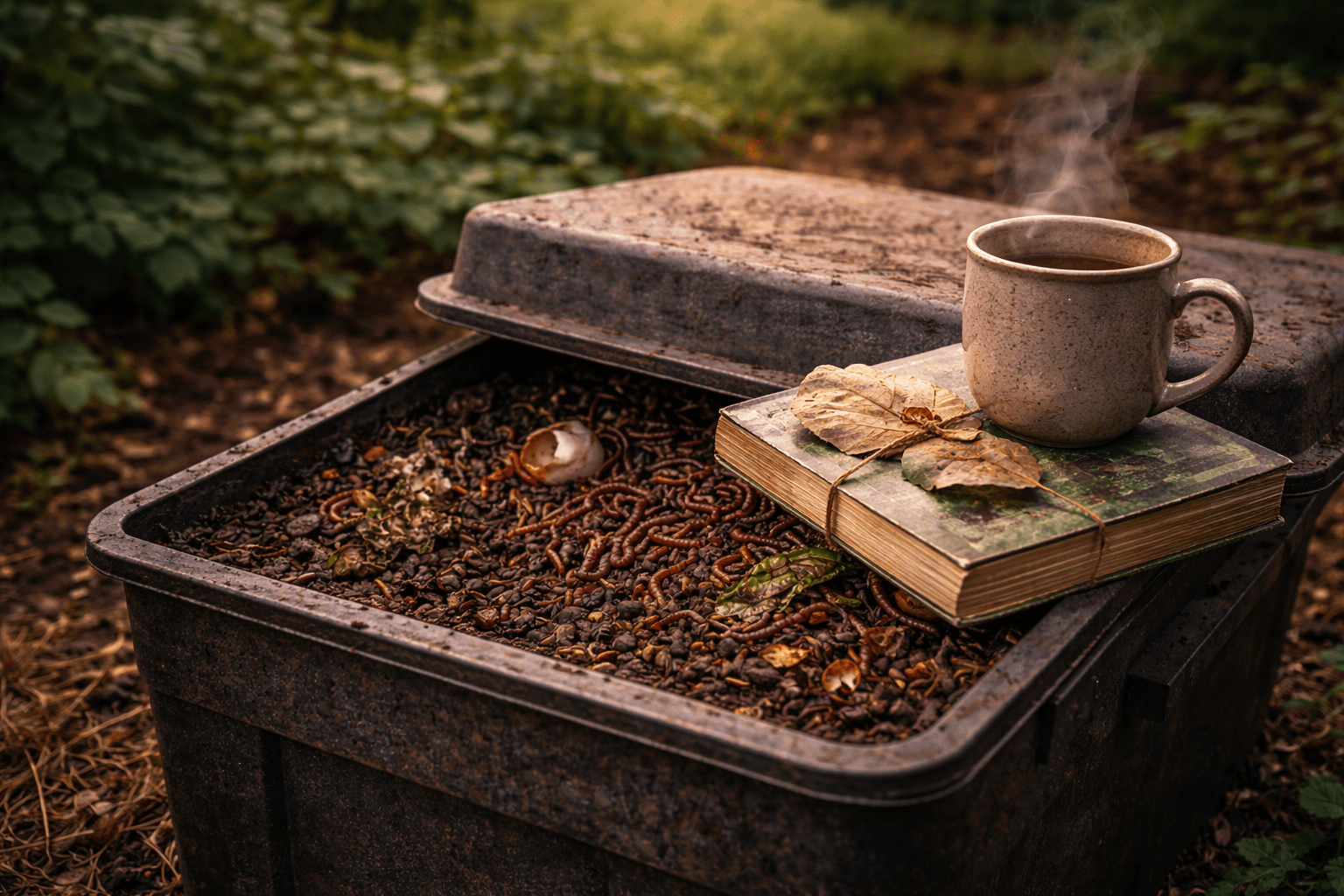
| Epilogue On Reading Further This series was written without references in the body for a reason. Worm farming is learned slowly, through repetition, proximity, and attention. It resists being reduced to instructions or checklists. What matters most is not what you know, but what you notice — how systems respond over time, how they recover, and how often doing less proves more effective than doing more. That said, many readers reach a point where curiosity turns practical. You want reassurance that what you’re seeing is normal. You want language for processes that are happening just out of sight. You want to place your experience within a wider understanding of soil, decomposition, and living systems. This epilogue exists for that moment — not to direct you outward, but to frame how further reading might be approached. If you do choose to read beyond this series, treat sources as companions rather than authorities. Look for material that explains processes rather than promises results. Favour work that acknowledges limits, context, and uncertainty. Be wary of anything that offers speed, optimisation, or guaranteed outcomes. Worm farming rarely rewards those ideas for long. It’s also worth remembering that no source will ever fully match your own system. Climate, housing, feeding habits, materials, and scale all shape outcomes in ways that cannot be standardised. Reading should sharpen your ability to interpret what’s in front of you, not replace it. If new information makes you more attentive rather than more anxious, it’s probably useful. If it pushes you towards constant adjustment, it’s worth pausing before acting on it. Over time, many people find they read less rather than more. Familiarity replaces the need for reassurance. You recognise the smell of stability. You notice when a slowdown is seasonal rather than problematic. You learn which changes resolve on their own and which require intervention. This knowledge is not dramatic, but it is durable. The aim of this series was never to produce expertise. It was to cultivate a way of looking — one that values patience, proportion, and restraint. Worm farming does not require mastery. It asks to be lived alongside. The more time you give it, the less it needs from you. If these essays have done anything useful, they’ve slowed the pace just enough for that relationship to form. From here, the work continues quietly, whether you are watching or not. The worms will take it from there. |
| About our writing & imagery Many of our articles are written by us, drawing on real experience, reflection, and practical work in gardens and places we know. Some pieces are developed with the assistance of AI, used as drafting and research tools rather than as a voice or authority. Featured images may include our own photography, original AI-generated imagery, or—where noted—images kindly shared by other creators and credited accordingly (for example, via Pixabay). All content is shaped, edited, and published by Earthly Comforts, and the views expressed are our own. |

