| Echinops When Geometry Comes Alive |
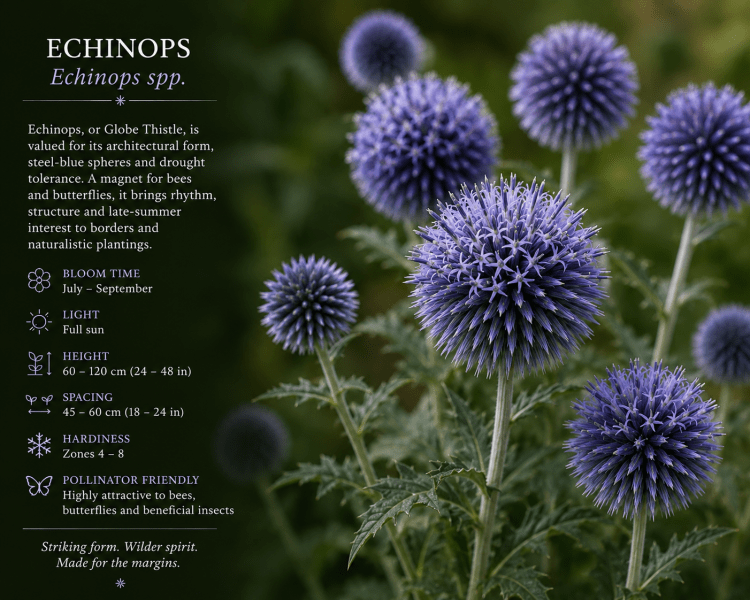
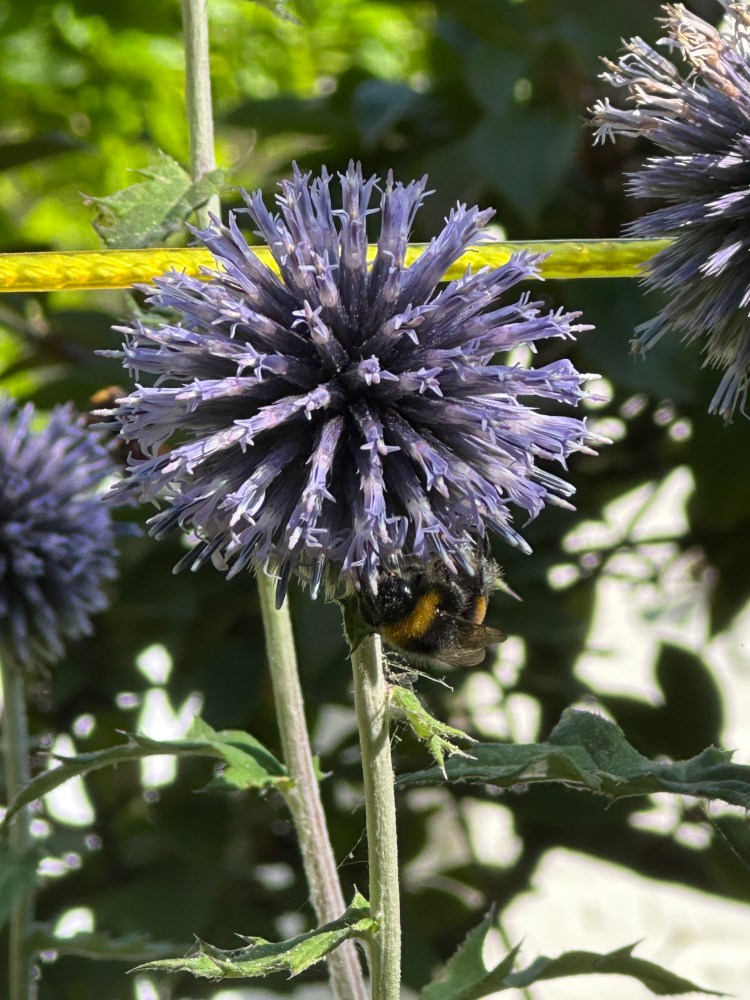
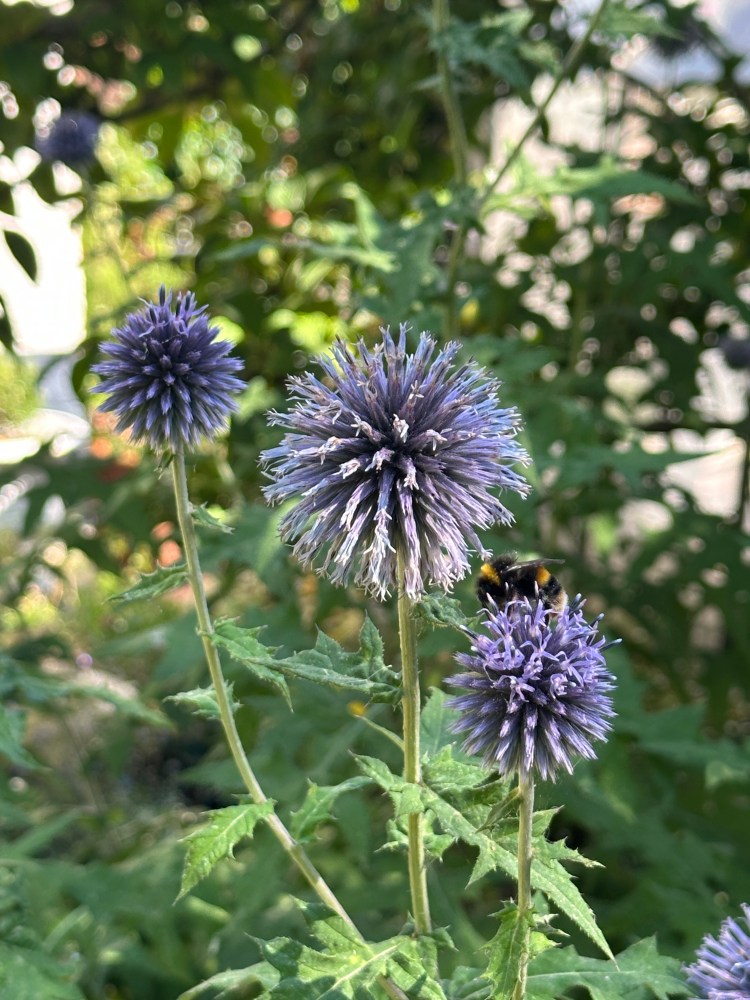
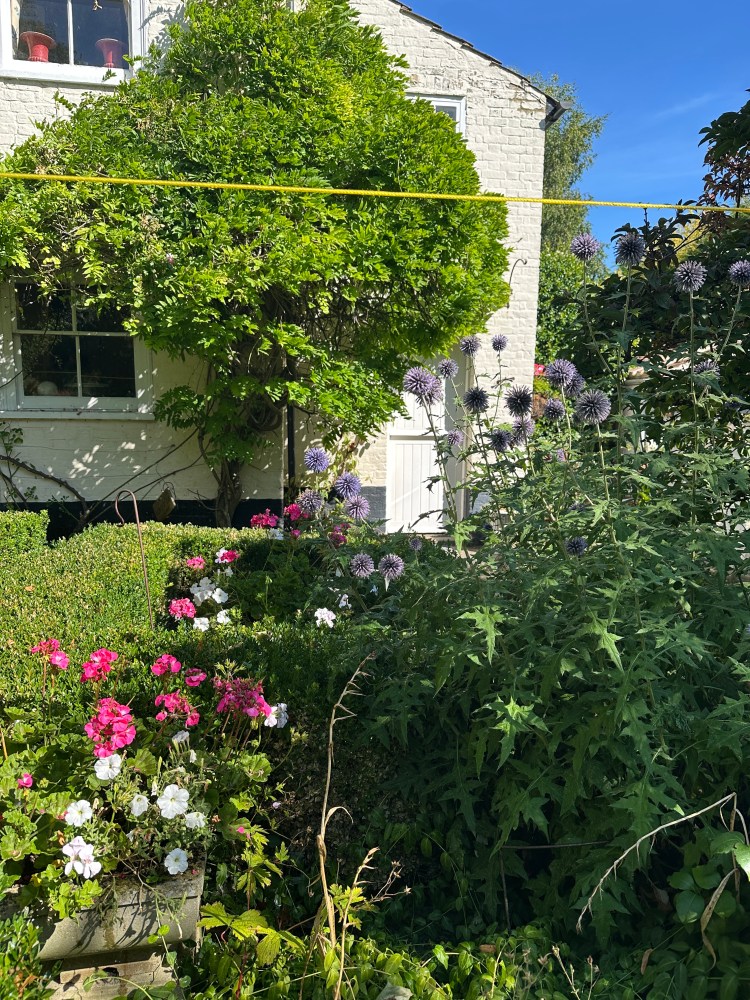
| There are moments when you’re supposed to be working but something in the garden makes you stop. Not for long, because there is usually a border still to weed or a hedge waiting somewhere, but long enough to watch. This happened recently with a clump of globe thistles standing in full sun. From a distance they looked almost too precise to belong among the softer planting around them, each blue-grey sphere balanced on its stem as though somebody had measured where it ought to be. Then I got closer and realised one of those perfect little globes had a bumblebee hanging underneath it, busily working its way around the flower and apparently unconcerned by my interest. That rather changed the picture. Echinops is an odd-looking plant when you look at it closely. Even its common name, globe thistle, gives a reasonable warning of what to expect. The foliage is deeply divided and prickly-looking, the stems are upright and purposeful, and the flower heads appear as almost perfect spheres. There is none of the softness we normally associate with a traditional herbaceous border. Put your hand towards one and instinct suggests caution, although the flower heads themselves are less fearsome than their appearance suggests. Yet watch one in flower on a warm summer’s day, and all that apparent severity disappears. Bees adore them. Rather than visiting a single large flower, they work their way around hundreds of tiny individual florets packed together into the globe, sometimes disappearing almost completely behind it. One bee leaves, another arrives, and occasionally several seem prepared to negotiate shared ownership. A plant that appeared completely static from ten feet away becomes a small, extremely busy feeding station when you stand beside it. That is one reason I have become increasingly suspicious of judging garden plants solely by how they look to us. We have a habit of separating plants into categories such as beautiful, architectural, useful, wildlife-friendly and occasionally troublesome, as though a plant must choose which department it belongs to. Echinops makes rather a nonsense of that. It is undeniably architectural, but it is also remarkably valuable to pollinating insects. Its flowers are unusual enough to become a feature without being garish. Once flowering has finished, the seed heads continue to contribute shape and structure long after many softer perennials have collapsed into the border. It is also refreshingly unfussy. Give Echinops plenty of sun and reasonably free-draining soil, and it generally prefers not to be fussed over. Once established, its deep-rooted nature makes it considerably more tolerant of dry conditions than many traditional border plants, something increasingly worth thinking about during our hotter, drier spells. Rich soil and too much cosseting can actually work against it, encouraging softer, taller growth that is more inclined to lean. Sometimes the kindest thing a gardener can do is stop trying quite so hard. There is a familiar gardening instinct to remove everything once it has finished flowering. Brown means dead, dead means untidy, and untidy apparently requires secateurs. Echinops is one of those plants that makes a good argument for resisting that instinct. The spent globes retain their shape remarkably well and can remain standing into autumn and winter, particularly when surrounded by grasses and other late-season perennials. They may no longer be blue, but that doesn’t mean they have stopped contributing to the garden. Seed heads have their own beauty, especially when caught by low winter light or frost. Of course, this doesn’t mean every dead stem must remain standing until February. Gardening is always a negotiation between appearance, wildlife, weather and what happens to be growing next door. A battered stem lying across a path has probably completed its artistic contribution. But automatically cutting everything down simply because flowering has finished can remove an entire season of interest before we’ve given it a chance to appear. What particularly appeals to me about Echinops is the contradiction. It looks hard but is extraordinarily generous. It appears static but is surrounded by movement. Its flowers are constructed from strict geometry, yet the life around them is wonderfully chaotic. Even the colour seems difficult to pin down. Depending on the light, those globes can move between steel grey, violet and blue, changing character as the sun moves across the garden. Perhaps that’s why the bumblebee made me look twice. Without it, I might have registered a handsome clump of globe thistles and carried on working. Instead I stopped long enough to notice what was actually happening. The plant wasn’t merely flowering. It was feeding something. Gardens are full of those small transactions, most of which continue perfectly well whether we’re watching or not. Flowers open, insects arrive, seeds develop and seasons move on while gardeners remain preoccupied with lawns, weeds and the endless question of what needs cutting back next. Every so often, though, it’s worth putting the secateurs down. You might discover that the plant you thought you were looking at is actually something else entirely. |


| About our writing & imagery Most articles reflect our real gardening experience and reflection. Some use AI in drafting or research, but never for voice or authority. Featured images may show our photos, original AI-generated visuals, or, where stated, credited images shared by others. All content is shaped and edited by Earthly Comforts, expressing our own views. |

