| A Hidden World Beneath the Surface |
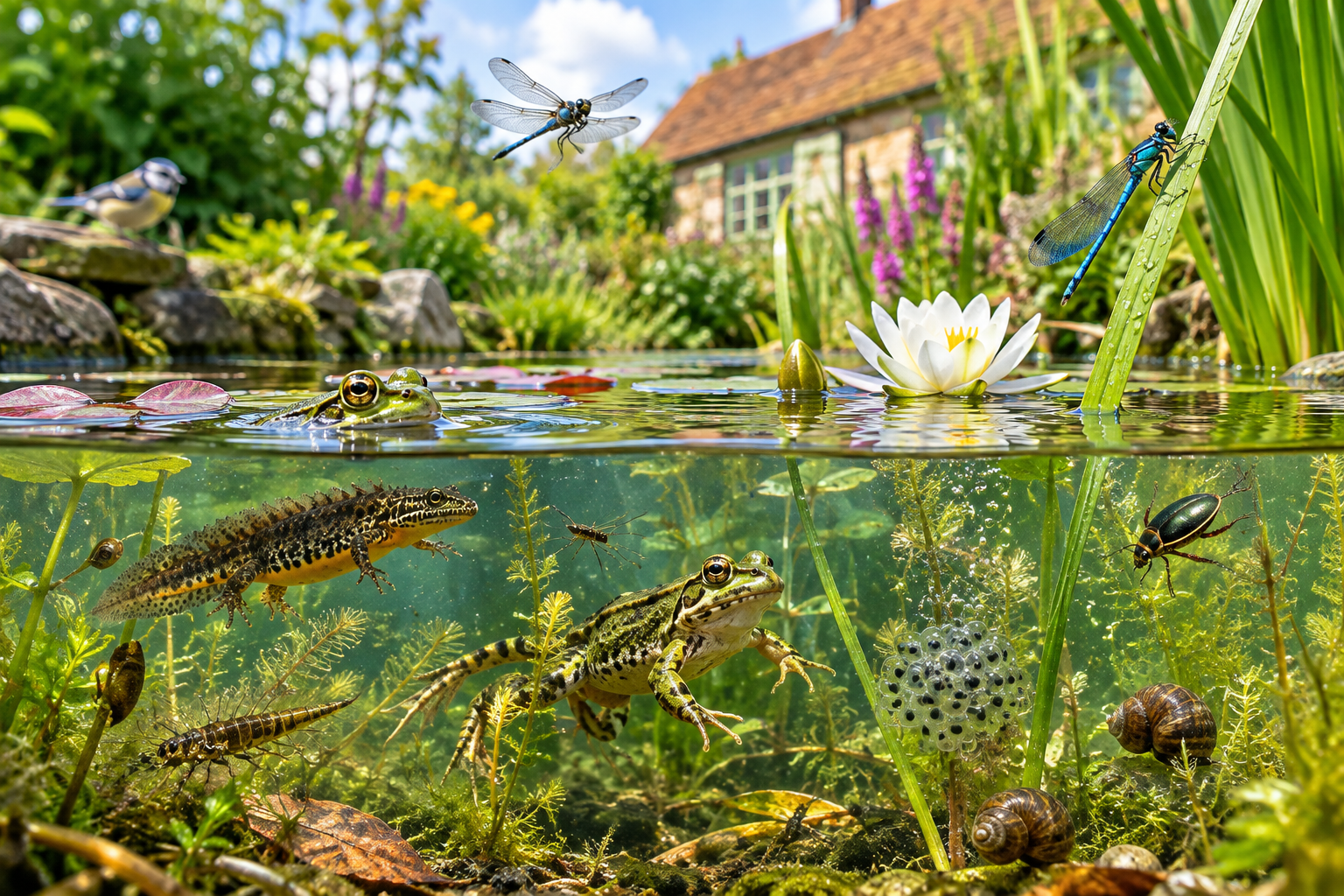
| To many people, a garden pond is simply a peaceful feature. A patch of still water reflecting the sky, perhaps home to a few water lilies and visited occasionally by a dragonfly. Yet beneath that calm surface lies one of the busiest and most fascinating ecosystems in the entire garden. Even the smallest wildlife pond supports an astonishing variety of life throughout the year. It becomes a refuge for amphibians, insects, microscopic organisms and countless other creatures, all interacting in ways that help the wider garden remain healthy and balanced. Rather than being an isolated feature, a pond acts as a biodiversity engine, supporting wildlife far beyond its own banks. Spring is when this hidden world truly awakens. As temperatures begin to rise, frogs, toads and newts return to the water to breed, often making surprisingly long journeys back to the same pond year after year. Sunlit shallows soon become filled with frogspawn, while beneath the surface insect larvae multiply rapidly. At the same time, microscopic plankton and beneficial bacteria expand in huge numbers, creating the foundation upon which the rest of the pond’s food web depends. By summer, the pond reaches its greatest abundance. Dragonflies and damselflies patrol above the water with remarkable speed and precision, while pond skaters glide effortlessly across the surface film. Below the surface, diving beetles and their formidable larvae hunt amongst the submerged vegetation, keeping other aquatic populations in balance. The pond itself becomes an important food source for birds, bats and hedgehogs, all taking advantage of the explosion in insect life that healthy water supports. As autumn arrives, activity begins to slow, but the pond remains far from dormant. Newts and other amphibians feed heavily before winter, building the reserves they need to survive the colder months. Fallen leaves settle to the bottom, where they begin to decompose naturally. This process is driven by countless microorganisms that quietly recycle organic matter, releasing nutrients back into the ecosystem and ensuring the pond remains productive for another season. Winter may appear lifeless from above, but beneath the surface the pond continues to function. Frogs rest safely within the mud or deeper water, insect larvae remain submerged awaiting warmer temperatures, and beneficial bacteria continue the slow but essential process of nutrient cycling. Even during the coldest months, life persists, simply operating at a gentler pace. Many of the pond’s most fascinating residents are also its least noticed. Flatworms, or planaria, move silently through the water and are remarkable for their ability to regenerate damaged body parts. Freshwater leeches help regulate populations of smaller organisms and are generally harmless to larger wildlife. Tiny bright-red water mites are often a sign of clean, healthy water, while hydra cling to aquatic plants using microscopic stinging tentacles to capture prey. Among the most impressive predators are the diving beetle larvae, often nicknamed “water tigers” for their efficiency as hunters. Equally effective are back-swimmers, agile insects that patrol just beneath the surface, helping to control mosquito larvae before they become flying adults. Freshwater snails complete the picture by grazing algae and recycling decaying plant material, quietly helping to maintain water quality. The value of a garden pond extends well beyond the water itself. Amphibians and predatory insects provide natural pest control, reducing the numbers of many common garden pests. Pollinating insects, birds and mammals all benefit from the reliable source of fresh water and food. At the same time, the pond helps create a more stable microclimate during periods of heat and drought. Even the surrounding soil benefits from increased moisture and biological activity, contributing to a healthier, more resilient garden. Perhaps that is the greatest surprise of all. A pond does not have to be large or elaborate to make a difference. Even a modest patch of water can become the beating heart of a garden, supporting an intricate web of life that continues through every season. While we may only notice the occasional frog or dragonfly, an extraordinary world is constantly at work beneath the surface, quietly keeping the garden alive. |
| About our writing & imagery Most articles reflect our real gardening experience and reflection. Some use AI in drafting or research, but never for voice or authority. Featured images may show our photos, original AI-generated visuals, or, where stated, credited images shared by others. All content is shaped and edited by Earthly Comforts, expressing our own views. |

