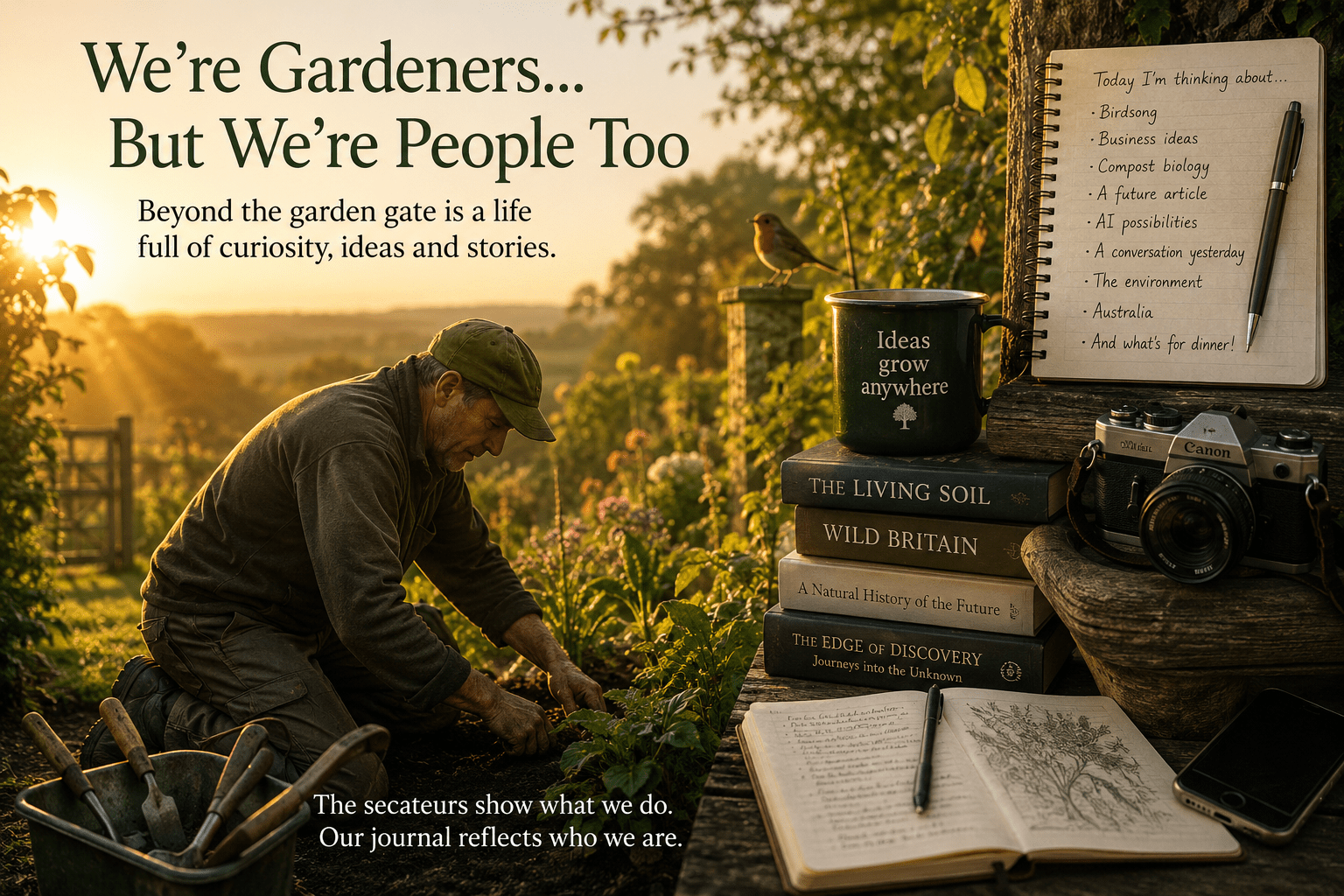
| There is an assumption that quietly follows many professions. Doctors are expected to think about medicine. Mechanics must surely spend their weekends repairing cars. Teachers are imagined to spend every evening marking books. Gardeners must spend every waking moment thinking about plants, lawns and flowers. It is an understandable assumption, but it is rarely true. Over the years I have smiled at the number of comments people have made that reveal just how easily we place one another into neat little boxes. I still remember meeting someone for the very first time who looked at me and said, “I thought you’d be taller.” I had no idea where that image had come from, but somewhere in their mind they had already created a picture of who I was before we had even shaken hands. Years later, someone else discovered that I enjoy gaming. His response was immediate. “I never had you pegged as one of those.” More recently, I have been asked why I waste my time writing, why I bother learning about artificial intelligence, why I spend time thinking about marketing or media and even why I would want to write articles when, in their opinion, “no one reads anymore.” Another person commented that I didn’t really have a life because all I seemed to do was garden and run a business. None of those remarks offended me. If anything, they intrigued me, because they all stemmed from the same misunderstanding. People were seeing my profession and assuming they had seen the person as well. The reality is rather different. When I am working in a familiar garden, my hands know exactly what they are doing. Years of experience mean that many of the practical tasks have become instinctive. I no longer have to consciously think about every cut I make or every border I weed. My eyes never stop observing the garden, noticing subtle changes that only familiarity reveals. A shrub may be showing the first signs of stress after a dry spell. A rose may have developed the earliest hint of black spot. A robin may already be waiting nearby, hoping that today’s digging will uncover breakfast. That professional awareness never disappears, but it occupies only one part of my attention. The rest of my mind is free to wander. Sometimes I think about composting, soil health, or how changing weather patterns are affecting the gardens I care for. Sometimes I consider the future of Earthly Comforts, working through staffing, insurance, taxation, or new ideas for the business. Quite often I find myself mentally composing the opening paragraphs of an article before I have written a single word. Many of the ideas behind Within Living Memory, The Edge of Discovery and When the World Stops Working first arrived while I was quietly pruning a shrub, edging a lawn or watering a thirsty container after weeks without meaningful rain. Other thoughts are far less structured. I replay conversations from the previous day and wonder whether I could have expressed myself better. I think about wildlife and the environment. I reflect on history, on the changing world around us and, now and then, my thoughts drift into completely abstract places that have absolutely nothing to do with gardening at all. I have even been known to talk to the birds, encourage a struggling plant or apologise before cutting something back that I know will soon return stronger than before. Some may smile at that, but when you spend your working life surrounded by living things, you begin to acknowledge them almost without thinking. People often ask whether I listen to music or podcasts while I work. The answer is always no. I prefer to listen to the garden itself. I enjoy hearing the wind moving through mature trees, the bees working the lavender, the changing birdsong throughout the day, and the quiet sounds that tell me the seasons are shifting once again. I also want to hear if a client opens the back door to say hello. Those sounds are part of my workday and part of why my thoughts can travel so naturally. It was for exactly this reason that I recently stopped referring to these pages as a blog and began calling them a journal. A blog often suggests a single subject. Readers naturally expect gardening tips, seasonal advice or the occasional plant recommendation. There is absolutely nothing wrong with that, but it never really reflected the way my own mind works. A journal feels different. A journal allows room for observation. It allows room for curiosity. It allows me to write about gardening one week and environmental change the next. It allows me to explore wildlife, business, artificial intelligence, history, unusual ideas or simply a thought that appeared while I was standing quietly in someone else’s garden listening to a blackbird sing. After all, gardeners don’t stop being curious simply because they put down the secateurs at the end of the day. We read books. We play games. We learn new skills. We worry about family, finances and the future. We remember our childhoods. We think about the world our grandchildren might inherit. We become fascinated by subjects that have nothing whatsoever to do with roses, lawns or pruning. We laugh, we reflect, we question and, like everyone else, we occasionally disappear down a rabbit hole simply because something captured our imagination. The garden may be where we work, but it is not the limit of who we are. I sometimes wonder how many remarkable stories quietly pass us by because we see only a person’s occupation. The accountant may paint landscapes. The builder may write poetry. The nurse may restore vintage motorcycles. The mechanic may spend weekends photographing wildlife. We rarely discover these things because we seldom think to ask. We should. The next time you see someone working quietly in a garden, don’t assume you know what is happening behind the secateurs. While their hands are tending the borders, their mind may be planning a book, solving a business problem, remembering a conversation, wondering how the climate has changed over the past fifty years, or simply enjoying the privilege of spending another day surrounded by nature. The secateurs tell you what they do. They tell you almost nothing about who they are. That should be worth remembering, not just for gardeners, but for every profession. Behind every uniform, every desk, every workshop, every classroom and every garden is a human being carrying a lifetime of interests, experiences, memories, questions and dreams that the rest of us rarely get to see. Gardeners are not just gardeners. We’re simply people whose workplace happens to be among flowers, trees and birdsong. |
| About our writing & imagery Most articles reflect our real gardening experience and reflection. Some use AI in drafting or research, but never for voice or authority. Featured images may show our photographs, original AI-generated artwork, or, where stated, credited images shared by others. All content is shaped and edited by Earthly Comforts, expressing our own views. |

