| Every Garden Teaches Its Gardener |
| If somebody had asked me five years ago when I would finally feel that I understood gardening, I suspect I would have offered an optimistic answer. Perhaps another five years. Perhaps another ten. Long enough to gain a little more experience, recognise a few hundred more plants and become more confident with pruning, propagation and the countless practical skills that every gardener gradually acquires. Looking back now, I can’t help smiling at the certainty of my younger gardening self. The longer I have worked in gardens, the more I’ve realised that the destination I imagined doesn’t really exist. Gardens have an extraordinary way of reminding us how much remains to be learned. Every season seems to arrive carrying a new lesson. A shrub that has thrived happily for years suddenly begins to struggle without any obvious explanation. A self-seeded plant appears in exactly the right place, quietly demonstrating better judgement than the gardener who had spent hours planning the border. One year the slugs win, the next year they almost disappear. Weather changes, insects arrive unexpectedly, diseases come and go, and nature calmly reminds us that certainty is always temporary. That is one of the reasons I still enjoy gardening as much as I ever have. There is something deeply satisfying about belonging to a profession where experience brings confidence but never complete certainty. Knowledge accumulates steadily over the years, yet every spring arrives with the quiet promise that it will still manage to surprise you. I find that rather comforting. It keeps curiosity alive. Of course, it isn’t only plants that educate us. Every client teaches something different, often without ever intending to. Some have shown me extraordinary patience, trusting that a young hedge will eventually become the screen they imagined even though, for a few years, it looks disappointingly sparse. Others have taught me how deeply people become attached to particular trees or favourite roses, reminding me that gardens are built as much from memories as they are from soil and plants. There have also been clients whose expectations challenged my own thinking, encouraging me to question the way I work and, occasionally, to recognise where my own strengths are best applied. Even the difficult days have proved surprisingly generous teachers. Mistakes, uncomfortable though they may feel at the time, have a habit of lingering long after our successes have faded into routine. A pruning cut made too hastily, a plant placed in the wrong position or an assumption that later proved incorrect all become part of a gardener’s education. They are rarely lessons we enjoy while they are happening, yet I suspect they shape our judgement more profoundly than the days when everything goes exactly to plan. The weather has perhaps been my most persistent tutor of all. It has no interest in our qualifications, our plans or our confidence. A summer drought quietly exposes weaknesses in planting that a wet year concealed. An unusually mild winter changes flowering times almost overnight. Storms reveal which trees were healthier than we imagined and which had been quietly declining for years. However carefully we think we have planned, the weather always reserves the right to offer its own opinion. Walking between gardens has taught me lessons as well. Those short journeys have become moments of reflection rather than simply travelling time. Sometimes I find myself replaying a conversation with a client. On other days I notice a wildflower growing from a crack in the pavement, a swallow hunting low over a meadow or an old apple tree carrying more fruit than I remember seeing the previous year. Those observations may have nothing directly to do with the next garden I visit, yet they quietly remind me that every landscape is connected to a much larger natural story. Perhaps that is why I have become increasingly cautious of anyone who claims to have all the answers. Gardening rewards confidence, but it punishes arrogance with remarkable efficiency. Nature has an endless supply of gentle reminders that there is always another perspective to consider, another technique to learn or another surprise waiting just beyond the next season. I think that is one of the reasons experienced gardeners often become quieter rather than louder. They have learnt that certainty is a fragile companion. Garden Butlering has reinforced that lesson more than anything else. Properly caring for a garden requires more than horticultural knowledge. It asks us to listen before speaking, to observe before acting and to accept that every property carries its own history, character and rhythm. What worked beautifully in one garden may prove entirely unsuitable in another. The longer I have spent looking after other people’s gardens, the less interested I have become in rigid rules and the more interested I have become in understanding each place on its own terms. When I look back over the years, I realise that I have probably learnt as much from the gardens as they have ever gained from me. Each one has left something behind. A new way of looking at a border, a better understanding of soil, a reminder to slow down, an appreciation for patience or simply another reason to remain curious. None of those lessons arrived dramatically. They accumulated quietly, one ordinary day at a time, until I eventually realised that I had been receiving an education all along. Perhaps that is the greatest privilege of spending a lifetime in gardens. You may begin your career believing that you are there to shape the landscape. If you stay long enough, you eventually discover that the landscape has been shaping you as well. |
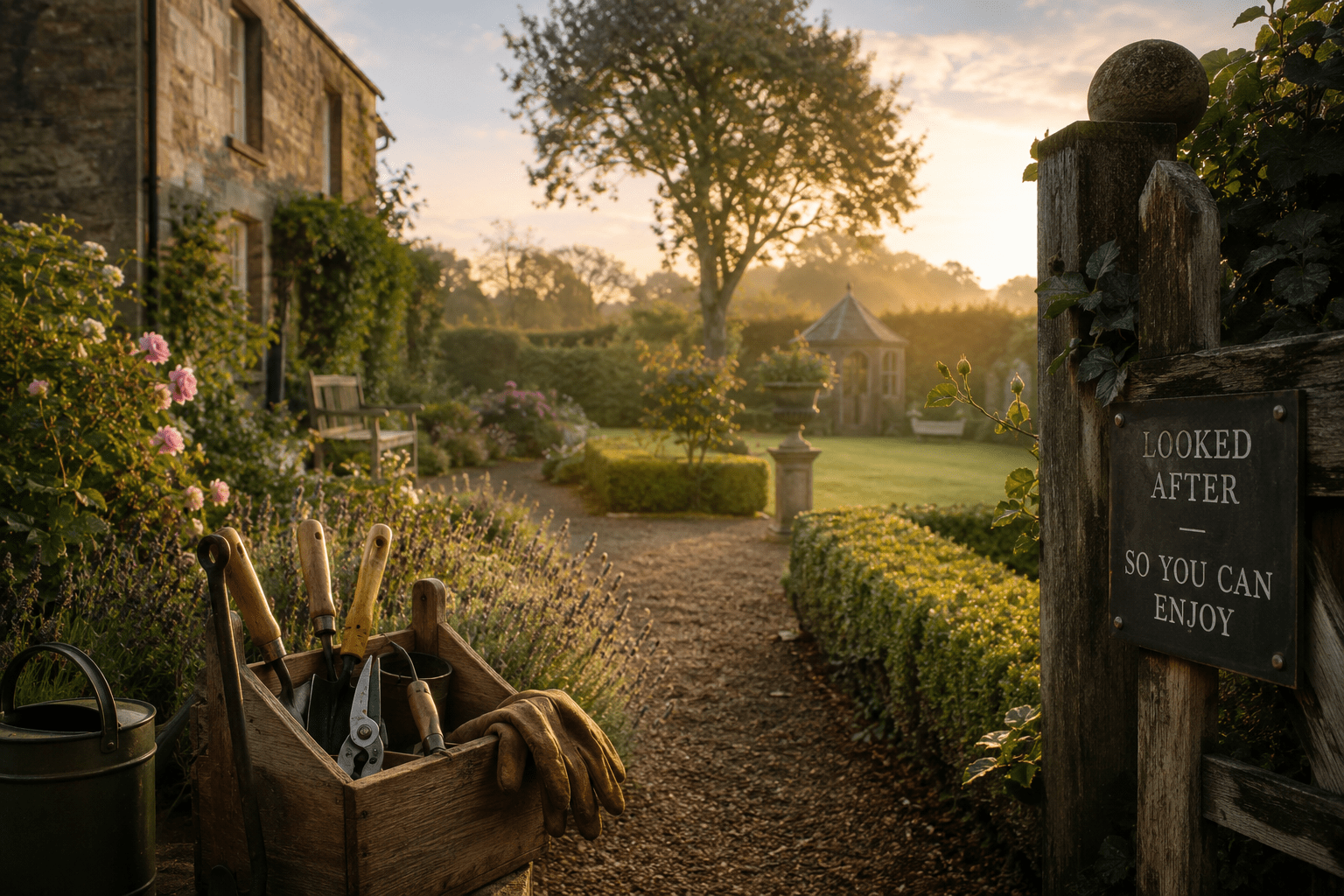
| About our writing & imagery Most articles reflect our real gardening experience and reflection. Some use AI in drafting or research, but never for voice or authority. Featured images may show our photos, original AI-generated visuals, or, where stated, credited images shared by others. All content is shaped and edited by Earthly Comforts, expressing our own views. |

