
| There is sometimes a temptation to divide people working with gardens into two camps: the ordinary gardener and the trained horticulturist. The reality is considerably more complicated. A trained horticulturist will usually have received structured education in subjects such as plant identification, soils, propagation, plant health, pruning, growing conditions and the science behind plant development. That knowledge is enormously valuable, but professional gardening requires considerable horticultural knowledge too. You cannot prune properly without understanding the plant you’re cutting. You need to know when it flowers, how it responds to pruning and whether now is actually the right time to touch it. You cannot maintain borders properly if you cannot distinguish between an emerging perennial and an enthusiastic weed, and you cannot sensibly recommend moving a struggling plant without considering soil, drainage, light, exposure and competition. When something looks unhealthy, you also need sufficient knowledge to recognise whether you are seeing drought stress, nutrient deficiency, pests, disease or simply the plant’s normal behaviour. And then, of course, there are the names. |
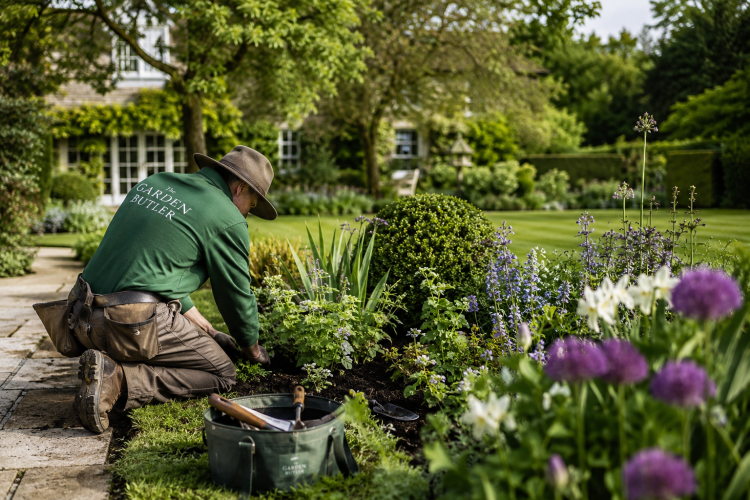
| A Rose Is Always a Rose — Until It Isn’t Clients sometimes tell us they want somebody who really knows plants — someone who knows all the Latin names. There is certainly value in identifying plants accurately, and botanical names allow us to distinguish precisely between plants that may otherwise share confusing common names. But knowing the name and knowing what to do with the plant are not quite the same thing. To most people, a rose is simply a rose, and quite often that is all the information a gardener actually needs. Until it isn’t. There comes a point when knowing what sort of rose it is matters. Its growth habit matters, how and when it flowers matters, and what you are trying to achieve by pruning it matters. That is when “it’s a rose” stops being enough. A professional gardener doesn’t need encyclopaedic knowledge of every plant in every garden. They need enough knowledge to make good decisions and, equally importantly, to recognise when they don’t know enough. Knowing when greater expertise is required is itself a form of expertise. Horticultural Depth and Gardening Breadth This may be where the distinction becomes more useful. A horticulturist may bring considerable depth of specialist plant knowledge, while a professional maintenance gardener requires extraordinary breadth. On Monday morning you may be mowing lawns. An hour later you are identifying weeds amongst herbaceous plants, followed by pruning a shrub, visiting a new client’s garden, diagnosing damage, moving compost, operating machinery and advising a client about whether climate change requires new garden strategies. You may also be considering whether a plant can be moved, whether wildlife means a hedge needs to be left alone, whether the ground is too wet to mow, whether irrigation needs adjusting and whether the weather is about to make the rest of the carefully planned day impossible. There are lawns, soils, plants, trees, hedges, pests, diseases, irrigation, composting, pruning, machinery, hand tools, ladders, waste, weather, wildlife and seasonal timing to understand. Then some things have relatively little to do with plants but everything to do with being a professional: safe working practices, time management, reliability, machinery care, travelling between properties, communicating with clients and working efficiently enough that three hours of gardening doesn’t somehow become five. A professional gardener doesn’t need to be an arborist, plant pathologist, soil scientist, structural engineer and horticulturist rolled into one. They need sufficient knowledge across an enormous range of subjects to make sensible decisions within their competence, and enough knowledge to recognise when something requires a specialist. The professional maintenance gardener is necessarily a generalist, but a very knowledgeable one. Knowing When to Say No There is another kind of knowledge professional gardeners need, and it is easily overlooked: we need to understand where our work stops. That boundary may be horticultural, ecological, legal, practical or simply a question of competence and safety. A client asking us to do something doesn’t automatically mean we should do it. We were reminded of this recently when we were asked to look at a large hedge. We arrived expecting to find exactly that, but initially neither of us could see the hedge the client was talking about. Eventually it was pointed out to us, and the reason we hadn’t recognised it was rather simple: the clipped growth began roughly twelve feet above ground level, sitting above substantial established trunks. We regularly maintain large hedges growing from ground level, including hedges reaching around twelve feet in height. But there is a considerable difference between a hedge that finishes twelve feet above the ground and one where the cutting work starts twelve feet above it. For us, the latter was no longer ordinary hedge maintenance. The question wasn’t whether we knew how to cut a hedge, but whether the work being requested still fell within the sort of work we should reasonably undertake. It didn’t. We left the client with the name of an arborist, and then l called the tree surgeon and asked them to contact our clients. Once the working area itself begins at that sort of height on established tree growth, access, equipment, risk and the nature of the work have changed. That is the point at which we would rather hand the job to an arborist with the appropriate specialist expertise and equipment. Saying no isn’t an admission that a professional gardener lacks knowledge. Sometimes it demonstrates that they possess enough knowledge to recognise the limits of their competence. The least reassuring answer to every gardening request may actually be: “Yes, I’ll have a go.” The Law Is in the Garden Too Professional gardeners also need to understand that the client’s garden may be private property, but that doesn’t mean everything in it can automatically be cut, removed or altered whenever somebody wishes. Wildlife protection can affect whether work should proceed. Trees may be protected. Work at height has safety implications. Machinery must be used appropriately, and waste cannot simply disappear just because it has left the client’s property. We don’t need to be lawyers, any more than we need to be arborists or plant pathologists. Still, we do need sufficient awareness to recognise when something needs checking before we continue. That produces several versions of the same professional answer: we shouldn’t prune that yet; we shouldn’t disturb that because wildlife is using it; we need to establish whether that tree is protected; we cannot safely undertake that work with our equipment; that is beyond our competence and requires a specialist. Knowing when to stop is every bit as important as knowing how to start. “We Want a Horticulturist” This creates an interesting problem when people employ gardeners. Clients sometimes say they want somebody with specialist horticultural knowledge. They want someone who can identify plants, understand their particular requirements and perhaps know their botanical names. There is nothing unreasonable about wanting that expertise, but the surprise sometimes comes when they discover what specialist horticultural expertise can cost [in my area alone, you are looking at starting prices of £45 per hour]. Suddenly, the question changes. Does the lawn really need to be mown by a horticulturist? Does somebody need specialist botanical knowledge to edge it, collect leaves, weed a path or undertake routine maintenance? Probably not. Equally, somebody whose principal qualification is owning a mower and hedge cutter shouldn’t necessarily be making complicated horticultural decisions about an established garden. The sensible answer lies somewhere between the two: use the right expertise for the right work. A good professional maintenance gardener needs sufficient horticultural knowledge to manage most ordinary garden situations effectively while recognising when specialist knowledge is required. That combination of knowledge and practical experience has value too. Then There Is the Garden Butler At Earthly Comforts, we use the term Garden Butler, and there is a reason for that. A Garden Butler isn’t simply somebody who arrives with a mower and waits to be told what to do. The job is to take a degree of responsibility for the garden. An experienced Garden Butler can often walk into a familiar garden and, almost at a glance, begin to read it. The lawn may need mowing, and the borders may need weeding, but something else may have changed since the previous visit. The rose has come away from its support, a tree tie is becoming too tight, one plant is beginning to overwhelm another, or a shrub needs attention while another really shouldn’t be touched yet despite looking untidy. Perhaps the lawn is struggling, and repeatedly cutting it shorter won’t solve the underlying problem. Perhaps a plant is showing the first signs of disease, a fence panel has started moving, or an outside tap is beginning to drip. Sometimes it is something tiny: ten minutes spent dealing with it today might prevent an hour’s work in six weeks. And sometimes the most important thing a Garden Butler notices is something they shouldn’t do. Nobody necessarily asked them to look for any of these things. That is precisely the point. A good Garden Butler develops a sense of ownership without actually owning the garden. Instead of arriving and thinking only about the jobs they have been instructed to complete, they gradually begin asking a much broader question: what does this garden need today? The Skill You Don’t See Perhaps this is one of gardening’s biggest image problems: much of the skill is invisible. Watch an experienced gardener prune something correctly, and it may look remarkably straightforward. A branch is selected, the secateurs are positioned, and a cut is made. What you don’t see is everything that happened in the gardener’s mind before those blades closed. They may have considered what the plant is, when it flowers, where new growth will emerge, how old the wood is, what shape they are trying to achieve and how the plant is likely to respond. They may also have considered whether this is the correct season to prune it or, despite the understandable desire to make it look tidier, whether leaving it alone would be the better decision. The physical action might take three seconds. Knowing which three seconds are appropriate can take years to learn. Good gardening often looks easy precisely because somebody knew what not to do. Managing the Garden, Not the Gardener There is another part of professional gardening that is rarely discussed: trust. There is absolutely nothing wrong with a client having priorities. They may meet their gardener and say, “I’d really like the front border looked at today.” They might have a list, or the gardener might ask whether there is anything in particular they would like them to concentrate on. That is communication, and good professional gardening depends upon it. The client knows how they want to use and enjoy their garden, and their priorities matter. But there is a considerable difference between telling a professional gardener what you would like achieved and continually directing them on how to spend every minute achieving it. Some clients outline their priorities and then let the Garden Butler get on with managing the garden. Others supervise much more closely — watching how long individual jobs take, repeatedly redirecting the gardener, questioning what they are doing or almost standing over them while they work. At that point something rather peculiar happens: the client is paying for experience while simultaneously limiting the gardener’s ability to use it. The Garden Butler may recognise that something not on the client’s list needs to be addressed now. A plant needs staking before the wind damages it, weeds are about to seed, something needs watering, or a shrub has reached the brief window when it can sensibly be pruned. Conversely, something on the list may actually be better left alone. That judgement is part of what the professional gardener is being paid for. There is an important difference between setting priorities and managing the person. The first helps the gardener understand what matters to the client; the second can prevent the gardener from managing the garden effectively. The best relationship is a collaboration: the client tells the Garden Butler what they want from their garden, and the Garden Butler works out what the garden needs to achieve it. That requires trust on both sides. The Casual Gardener Problem And then we come to a rather uncomfortable part of the gardening industry. Almost anybody can call themselves a gardener. There is no requirement to demonstrate that you can identify plants before buying a mower. Nobody asks you to sit an examination before purchasing a hedge cutter, and a strimmer doesn’t enquire about your horticultural knowledge before agreeing to start. For somebody wanting to earn a little extra money, gardening can therefore appear to be an easy occupation to enter. Some people entering it that way will become excellent gardeners. Others won’t. There is a poor-quality end of the gardening market where price, rather than knowledge, responsibility, or quality, becomes the principal selling point. The problem isn’t simply that poor gardening exists — poor work exists in every occupation — but what it can do to the perception of all gardeners. A customer chooses someone primarily because they are considerably cheaper. The lawn is repeatedly scalped, plants are strimmed accidentally, perennials disappear because they are mistaken for weeds, shrubs are cut whenever they look untidy regardless of how or when they flower, and hedges are attacked simply because cutting them is what the customer is paying for. Sometimes the garden even looks perfectly tidy when they leave, and that is what makes poor gardening particularly deceptive. The damage may not become apparent until later: the shrub doesn’t flower, the lawn steadily deteriorates, the perennial never reappears, or a plant develops an increasingly unnatural shape because it has repeatedly been cut without understanding how it grows. Then the customer becomes dissatisfied, and sometimes the conclusion isn’t “I employed a poor gardener.” It becomes “Gardeners don’t know what they’re doing.” That is the peril for the rest of the profession. The poor-quality gardener hasn’t simply provided poor work; they have helped establish both a price expectation and a quality expectation for everybody who follows them. The next professional gardener may therefore inherit two problems simultaneously: the customer remembers what the cheap gardener charged and how badly the cheap gardener performed. The professional is then expected to provide substantially better knowledge, reliability, and results when compared at the same price. That isn’t comparing like with like. Cheap Doesn’t Automatically Mean Bad There is an important qualification here. A cheap gardener isn’t automatically a bad gardener. There are extremely knowledgeable people working independently who keep their costs low, have gardened for decades and provide excellent service. Equally, an expensive gardener isn’t automatically a good one. Price alone proves very little. The distinction is competence. Someone who understands their limitations, works carefully, treats the client’s garden with respect and does good work deserves respect regardless of what they call themselves. The problem is poor-quality gardening being sold as though it were equivalent to professional gardening simply because both people happen to arrive carrying gardening tools. They aren’t necessarily providing the same thing. “But Someone Else Will Do It Cheaper” There will almost always be somebody prepared to do a job for less. That doesn’t mean the cheaper person is necessarily poor, but it doesn’t establish what professional gardening ought to cost either. A legitimate gardening business has expenses that somebody doing a handful of gardens for extra money may not have. There are wages, employer costs, insurance, vehicles, fuel, commercial machinery, servicing, repairs, replacement tools, protective equipment, administration and all the other expenses involved in operating a business. There is also working time businesses have to pay for but cannot necessarily sell directly to a client. Machinery needs loading, vehicles need travelling, equipment needs maintaining, schedules need organising, invoices need producing, and waste needs dealing with. Then, of course, there is the British weather, which occasionally looks at a carefully constructed working week and laughs. Nobody assumes that the hourly workshop rate charged by a garage is the mechanic’s take-home wage, yet people sometimes make that calculation precisely with gardeners. Professional Means Accountable There is another word that belongs alongside skill and knowledge: accountability. A professional gardening business isn’t responsible only for making the garden look good while someone is standing in it. It is responsible for the people it sends to the property, the machinery they use, how safely they work, the advice they give and the standard of work they leave behind. If something goes wrong, there is a business behind that gardener. If a member of staff makes a mistake, the business cannot simply shrug and disappear; it owns the problem. Over the years, l have made mistakes in gardens, it happens. The secret to success is to not deny it, but to own it and learn from it. There are also responsibilities the client may never see: insurance, machinery maintenance, staff costs, administration, waste management, training, scheduling, and the considerable amount of work required to ensure the gardener arrives at the right garden with the right equipment at the right time. Professionalism isn’t simply being better at pulling weeds. It is accepting responsibility for the service being provided. The Strange Economics of Growing Things Gardening suffers from another peculiar problem: nothing stays finished. A decorator paints a room and, barring accidents, it remains painted. A plumber repairs something, and hopefully it remains repaired. A gardener finishes working on a garden on Tuesday, and by Wednesday the plants have already begun plotting their comeback. Grass grows, weeds germinate, hedges extend themselves, leaves fall, flowers finish, branches move, and the seasons steadily alter everything around them. The garden is never completed because it is alive. Sometimes that makes repeated visits look like repeated expenditure when, in reality, the fact that everything continues to change is precisely why gardens require ongoing care. Professional gardening isn’t repeatedly completing the same unfinished job; it is managing a living environment that never stops responding to weather, seasons, wildlife and its own growth. Price and Value Aren’t the Same Thing This brings us back to price. A client may initially say they want someone with horticultural expertise and then discover how much that specialist expertise costs. They may decide that level of specialist knowledge isn’t actually required for routine maintenance, and that’s perfectly reasonable. What isn’t reasonable is expecting specialist knowledge, professional reliability, good machinery, insurance, accountability, and experienced judgement while simultaneously expecting the price to compete with that of the least expensive local gardener advertising. Something has to pay for those things. Likewise, when a professional service has been provided at a heavily discounted rate for a long time, the discount can gradually disappear from people’s thinking. The reduced price becomes the price. When it eventually changes, it can therefore feel as though gardening has suddenly become expensive rather than that an unusually low historical price is being corrected. The cheapest gardener isn’t necessarily the best value. The most expensive gardener isn’t automatically the most skilled, and the horticulturist isn’t automatically the right person for every gardening job. Value lies in employing the right level of knowledge and skill for the work that actually needs doing. What Are You Actually Paying For? Perhaps this is the real question. When you employ a professional gardener, are you simply paying somebody to cut the grass, trim the hedge and remove the weeds? Sometimes those are exactly the jobs that need doing, but behind those simple jobs should sit something considerably more valuable. You are paying somebody who knows when the grass shouldn’t be cut, recognises the plant that shouldn’t yet be pruned, notices the problem you haven’t spotted and understands why something isn’t thriving. You’re paying for somebody who knows that sometimes a rose is simply a rose — and recognises the moment when knowing which rose suddenly matters. You are also paying for somebody who can look at a job they have been asked to undertake and say, “No. That’s not one for us.” That isn’t necessarily a weakness; it may be one of the clearest signs that you have employed a professional. They should recognise when wildlife means a job needs to wait, know how to use machinery safely, understand where their competence ends, leave the property looking better than they found it and turn up when they said they would. They should be able to arrive at a garden they know, look around and recognise what needs their attention. And if there is something you particularly want done, you should be able to tell them. That is the relationship. Perhaps most importantly, you are paying someone to look after the garden without having to manage the gardener. That last part is something we believe strongly at Earthly Comforts, and it is one of the reasons we use the term Garden Butler. A horticulturist may bring specialist depth. A professional maintenance gardener brings enormous practical breadth. A good Garden Butler needs enough of both, together with observation, judgement, responsibility and an understanding of the client and their garden. The truly professional gardener also knows when what stands in front of them requires knowledge, equipment or competence they don’t possess. Gardening is manual work, but it is also skilled work. It combines horticulture, machinery, observation, judgement, experience, physical effort, problem-solving, responsibility, safety and customer service in an occupation whose practitioners frequently finish the day covered in mud. That may be partly why we sometimes underestimate it. The skill doesn’t arrive wearing a suit and carrying a laptop. Sometimes it arrives in muddy boots with a pair of secateurs in its pocket. But it is skill nonetheless. And perhaps professional gardening doesn’t need to become expensive. It simply needs to stop being expected to be cheap. |
| About our writing & imagery Most articles reflect our real gardening experience and reflection. Some use AI in drafting or research, but never for voice or authority. Featured images may show our photographs, original AI-generated artwork, or, where stated, credited images shared by others. All content is shaped and edited by Earthly Comforts, expressing our own views. |

