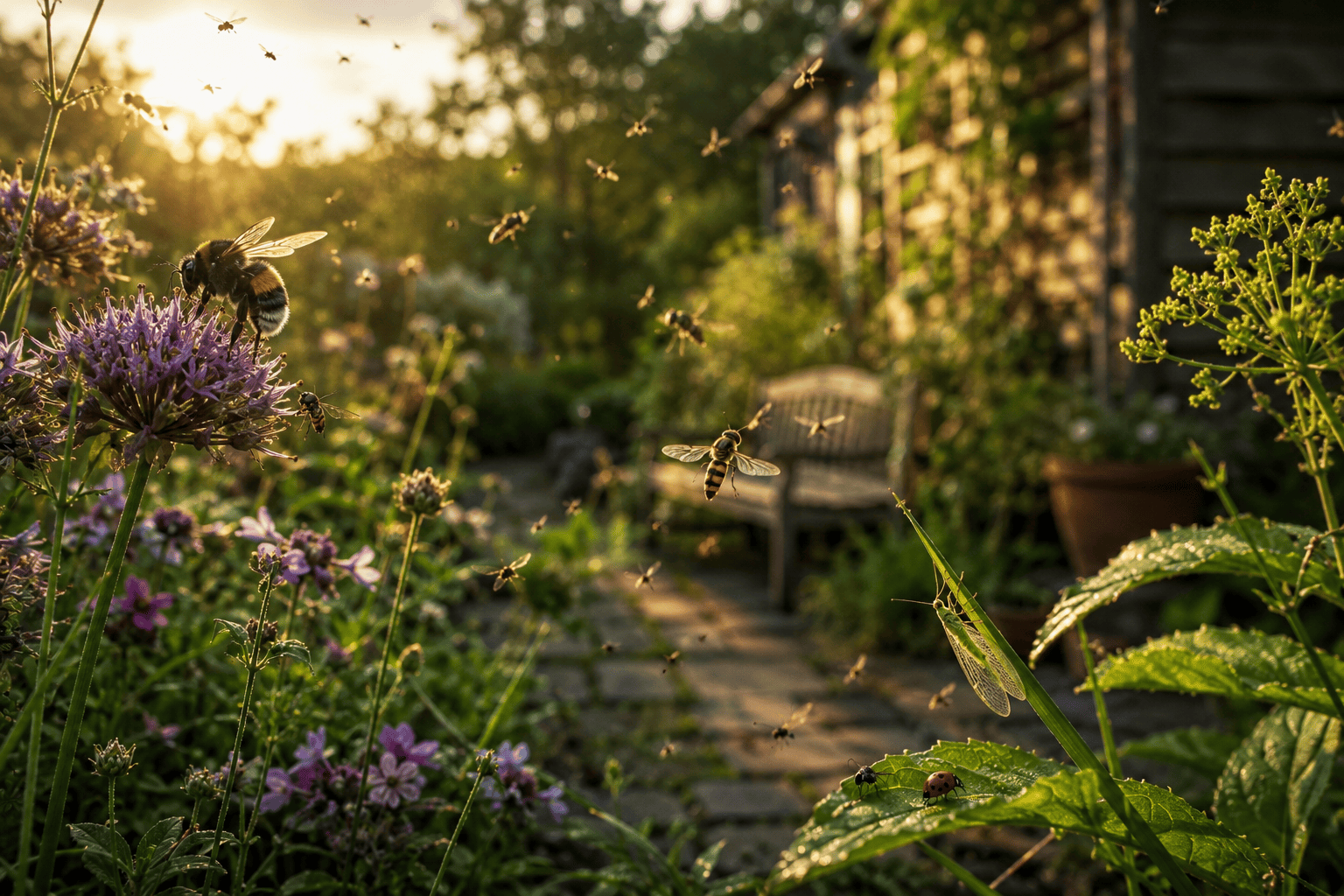
| We notice the butterfly, hear the bumblebee and complain about the fly in the kitchen. What about everything else? |
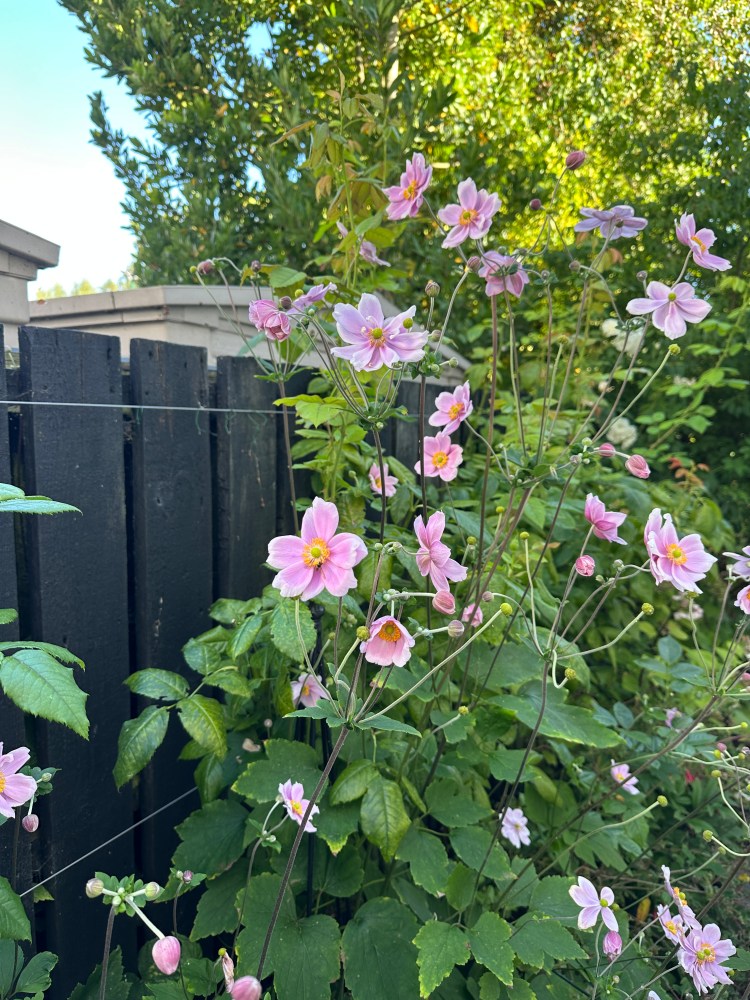
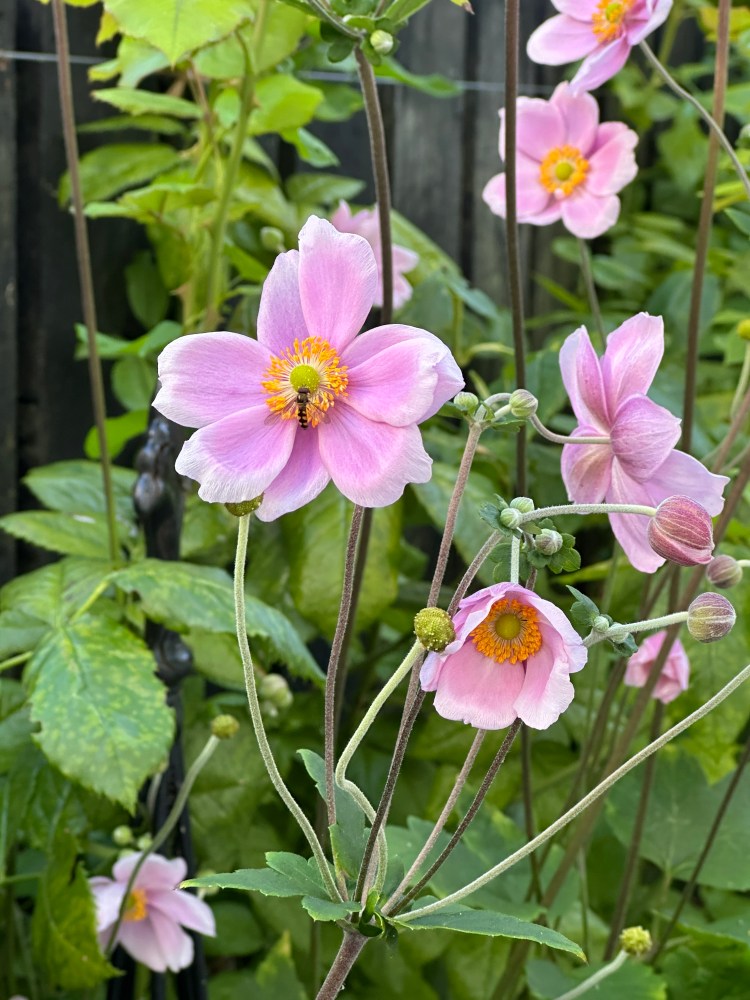
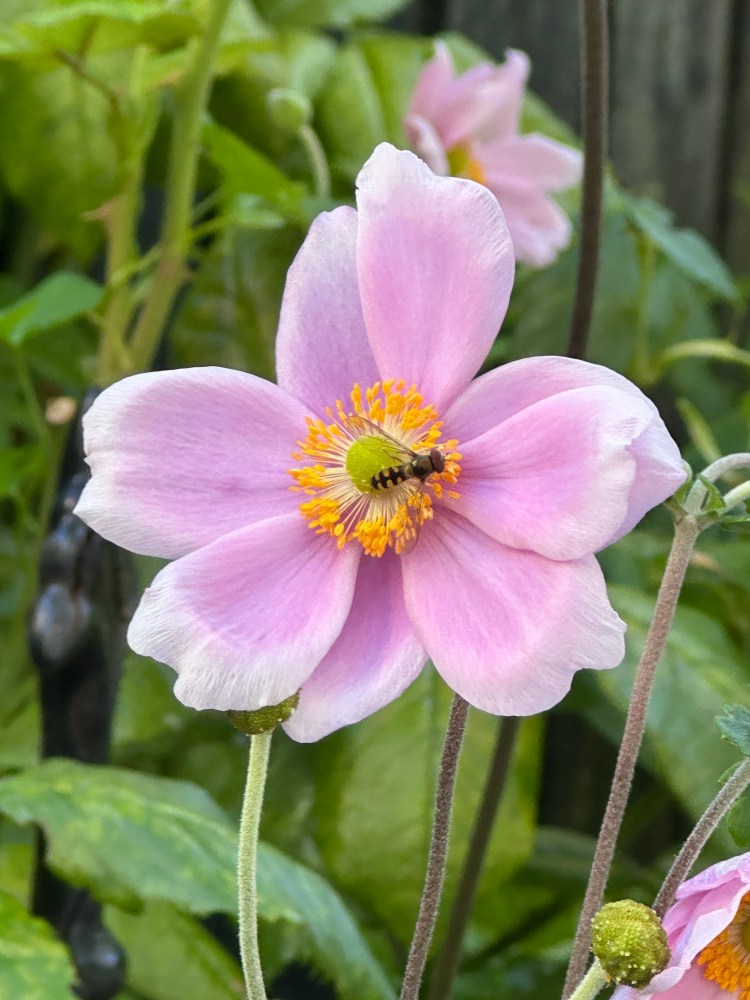
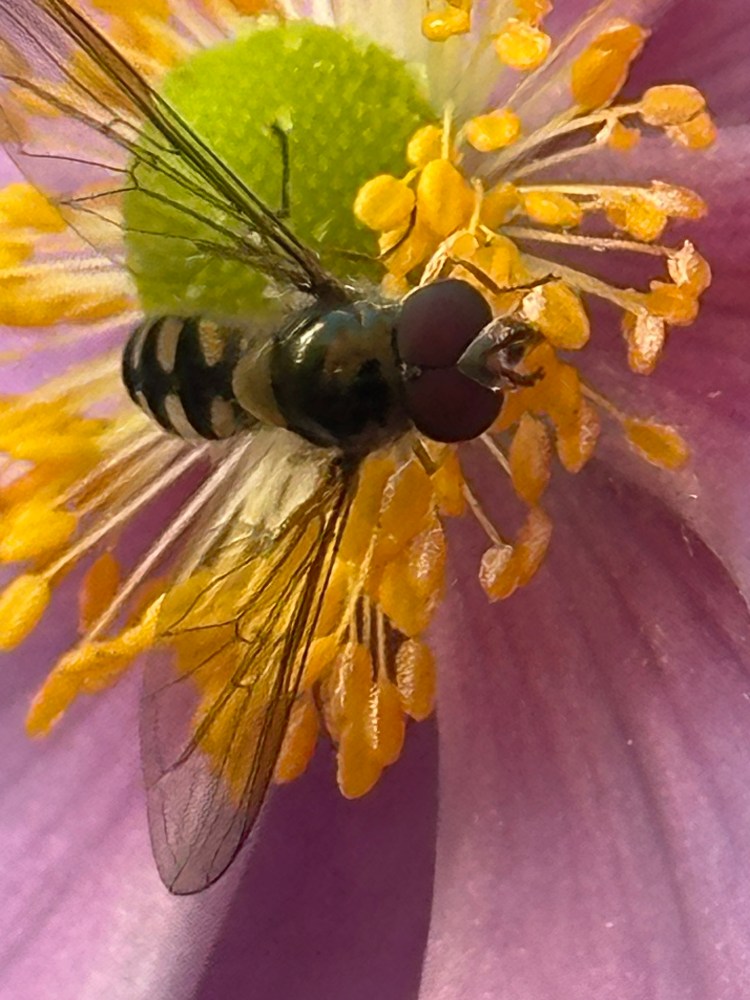
| There are days when I can be working in a garden and suddenly realise that I have spent several minutes watching something I wasn’t actually there to watch. It might be an insect moving underneath a leaf, a hoverfly holding almost perfectly still in the air, or ants travelling along a route that apparently makes complete sense to them even if I can’t immediately see where they are going. Gardening does rather encourage this sort of distraction. You begin by clearing around a plant and, several minutes later, find yourself wondering what a tiny creature beside it is doing. I have been interested in insects since I was six and fascinated by them from around age ten, so I notice them more readily than someone who has never had much reason to look. Even so, it made me wonder about something surprisingly difficult to answer. How many insects does an ordinary person actually see during an ordinary day? Not in the Amazon rainforest or on safari, but walking through a British garden, along a pavement, across a park, into the office or simply opening the kitchen window. I expected there might be an approximate scientific answer. There isn’t. And once you start thinking about why there isn’t, the question becomes considerably more interesting than the number would have been. Seeing is not necessarily noticing. The first difficulty is deciding what we mean by see. If a midge passes through the edge of your vision but you don’t consciously register it, have you seen it? What about twenty aphids underneath a leaf you walked past? Or an insect sitting perfectly still against tree bark that was technically within your field of vision but successfully camouflaged? Human attention is selective. Our brains cannot give equal importance to everything entering our senses, so attention is directed towards information that seems relevant, unexpected or important. Psychologists have demonstrated this rather wonderfully through experiments in inattentional blindness, in which people concentrating on one visual task can completely fail to notice another surprisingly obvious event occurring in front of them. Insects have an additional disadvantage if their ambition is to be noticed by us: most are small. A butterfly moving across an open space attracts attention. So does a large bumblebee visiting flowers close to our face, or a wasp investigating lunch with rather more persistence than we would prefer. Tiny beetles, springtails, thrips, aphids, leafhoppers and small flies can occupy the same garden without earning anything like the same recognition. Ask someone in the evening which insects they saw that day, and they might remember the butterfly, the bee, and the fly that spent twenty minutes demonstrating that an open kitchen window is apparently much easier to enter than to leave. That doesn’t mean those were the only insects they encountered. They were simply the ones that made it into the day’s memories. What is actually around us? Britain has an extraordinary insect fauna. The precise total changes as species are discovered, recorded, introduced or taxonomically revised, but there are well over 24,000 insect species recorded in Britain. Beetles alone account for roughly 4,000 species, while flies contribute more than 7,000. Most people will encounter only a tiny fraction of those species, of course. A garden in Kent is not going to contain Britain’s complete insect fauna, however untidy the shed becomes. But even relatively ordinary gardens can support surprisingly diverse communities because, from an insect’s point of view, what we call a garden is actually a collection of very different habitats. A lawn is one habitat. The soil beneath it is another. A hedge offers foliage, flowers, bark, dead wood and shelter. Compost introduces decomposing organic matter, fungi, moisture and heat. A pond completely changes the possibilities again. Flowering plants provide nectar and pollen, while the plants themselves provide food for insects that eat leaves, stems, roots, seeds or sap. Then predators and parasitoids arrive because those other insects are present. This is something gardening has made increasingly obvious to me. You don’t really have one garden ecosystem. You have dozens of small ones overlapping. Lift a pot that has been sitting undisturbed for a while, and you enter a different world from the one occupying the flowers half a metre above it. Look beneath a leaf rather than at its upper surface, and the population changes again. Move from a sunny border into the cooler base of a hedge, and you have altered temperature, humidity, wind exposure and vegetation within a few steps. To us, it is one garden. To something a few millimetres long, it may as well be several countries. The insects that don’t want to be seen There is another problem with trying to count what we see. A great many insects have spent millions of years becoming exceptionally good at going unnoticed. Camouflage is widespread across insect groups. Some resemble leaves, bark, twigs, thorns or patches of lichen. Others possess colours and patterns that make them difficult to distinguish from their surroundings. Remaining unnoticed can mean avoiding a predator, approaching prey or surviving long enough to reproduce, so there has been considerable evolutionary advantage in being overlooked. And then there are insects we miss because they are somewhere we rarely look. Leaf miners spend part of their lives inside leaves. Gall-forming insects manipulate plant tissues into structures that provide food and protection. Many beetle larvae develop inside dead wood. Numerous insects spend substantial parts of their life cycles underground, underwater or concealed within vegetation. Others are principally nocturnal and become active after we have gone indoors. Even the insects we recognise may spend most of their lives in forms we would not immediately associate with them. A butterfly is obvious when it passes across the garden in sunlight. The egg from which it began, the caterpillar feeding amongst vegetation and the pupa quietly completing one of biology’s most remarkable transformations may all escape notice. We tend to judge insect abundance by the adults we see. The insects have never agreed to those terms. A flower is considerably busier when you stop. One of the simplest ways of discovering how much we normally overlook requires no equipment at all. Stop beside a patch of flowers on a warm day and don’t do anything. That last part can be surprisingly difficult for a gardener. At first you notice the obvious visitors: perhaps a bumblebee or butterfly. Stay there, and smaller things begin to appear. Hoverflies arrive and disappear. Tiny flies move between flowers. A beetle may be buried amongst the petals. Something very small walks along a stem. An ant appears from somewhere below. Eventually, you begin to see movements that were present from the moment you stopped but hadn’t yet become important enough for your brain to register. The flowers haven’t suddenly attracted more insects. You have changed the way you are looking. This is one reason formal insect surveys use defined methods rather than relying upon someone simply walking through an area and remembering what they saw. Entomologists use techniques including sweep nets, pitfall traps, light traps, malaise traps, suction sampling and carefully standardised visual observations. Different methods reveal different portions of an insect community because no single method sees everything. Even scientists have to decide what they mean by there before they can begin counting. A garden isn’t equally busy every day. Suppose we nevertheless tried to answer the original question by asking someone to record every insect they noticed. The result would vary enormously from one day to the next. Temperature matters because insects are ectothermic: their activity is strongly influenced by environmental temperature. Sunshine, wind and rainfall alter flight and foraging behaviour. Season changes which adults are present, which flowers are available and which stages of different life cycles are active. A warm June afternoon beside flowering plants could produce constant visible activity. A wet January morning might appear almost insectless. Almost. Winter does not empty the garden of insects. Many survive as eggs, larvae or pupae. Others overwinter as adults in bark, leaf litter, hollow stems, sheds and other protected places. Some remain active whenever conditions allow. The garden that appears quiet in January has not necessarily lost its insect population; much of it has become less visible. This matters when we make judgements about whether there are “lots of insects” around. We often measure nature by what happens to be visible when we decide to look. Nature is under no obligation to be conducting its business during our inspection. Could an ordinary garden contain hundreds of species? This is where the question becomes larger than simply counting individuals. Citizen-science projects and ecological studies repeatedly demonstrate that gardens can support substantial biodiversity. Research into urban gardens has found that their value does not depend solely upon having rare plants or deliberately creating something resembling a nature reserve. Vegetation complexity, flowers, trees, shrubs, ponds, dead material and reduced disturbance can collectively provide resources for many different organisms. The important word is variety. A garden consisting almost entirely of close-cut grass provides a relatively limited range of opportunities. Add flowering plants, shrubs of different heights, a tree, some undisturbed soil, dead wood, leaf litter, compost and perhaps water, and the number of ecological niches increases dramatically. That doesn’t mean every garden needs to become completely unmanaged. Gardening and wildlife are not opposites, despite the way the argument is sometimes presented. I work in gardens professionally, and gardens still need to function for the people who own them. Paths have to remain paths, lawns may need cutting, and plants occasionally have the unfortunate habit of growing exactly where nobody wants them. But there is a difference between managing a garden and sterilising it. Leaving some stems standing, allowing a little leaf litter beneath shrubs, retaining suitable dead wood, providing flowers across different seasons, and avoiding unnecessary pesticide use can all increase opportunities for insects without making the garden look abandoned. Sometimes the useful habitat is already there. We haven’t recognised it as habitat. What happens when insects become harder to find? There is a more serious reason for asking how many insects we notice. Insect populations are changing. Long-term studies from different parts of the world have reported substantial declines in the abundance, biomass or distribution of some insect groups. The famous German protected-area study published in 2017 recorded a decline of more than 75 per cent in flying-insect biomass over 27 years at the sites studied. Other research has produced different patterns, including declines in some groups, increases in others and considerable variation between regions and habitats. That distinction matters. It would be wrong to take one dramatic result and announce that three-quarters of all insects everywhere have disappeared. They haven’t. Insect trends are complicated, monitoring is uneven, and the enormous diversity of insects makes sweeping global statements particularly difficult. But it would be equally wrong to dismiss the evidence simply because it doesn’t provide a single worldwide percentage. Habitat loss, intensive land use, pesticides, pollution, invasive species and climate change can all affect insect populations, sometimes in different directions. Species adapted to warmer conditions may expand into new areas while others contract. Generalists may cope where specialists cannot. A changing climate doesn’t simply produce “fewer insects”; it alters ecological relationships, ranges, timing and survival. Our failure to notice insects may create an additional problem here. It is difficult to recognise the disappearance of something you never realised was present. What would happen if we deliberately noticed them? So I cannot tell you how many insects the average person sees in a day. I don’t think anybody can, at least not in a scientifically meaningful way. The number would depend upon where that person lives, where they go, the season, weather, time of day, surrounding habitat and, perhaps more than anything else, whether they have learned to notice small things. But we can answer a slightly different question. Are there more insects around us than most of us consciously register? Almost certainly. One of the advantages of working in gardens is that you repeatedly encounter things up close. I have been fascinated by insects for most of my life, but professional gardening has given me another way of seeing them. When your hands are actually amongst plants, soil, compost, hedges and leaf litter, insects stop being occasional visitors and become part of the fabric of the place. They are not always spectacular. Most aren’t. That may be the point. The butterfly gets noticed because it is colourful and moving through open air. The bumblebee announces itself. The wasp occasionally insists upon being included in proceedings. But much of the insect world operates quietly, at a scale and in places where we rarely direct our attention. Perhaps the most interesting experiment isn’t to count every insect we encounter. It may be to stop for five minutes. Choose a plant. Don’t weed it, prune it, feed it, move it or decide what is wrong with it. Just watch. Look at the flowers, then the stems. Turn over a leaf. Look at the soil underneath. Notice what flies through and what stays still. Look once, then look again. I suspect most people would discover something they hadn’t noticed before. And once you begin noticing insects, there is a slight problem. You tend to keep noticing them. For someone who started doing that at about six years old, it appears to be a fairly persistent condition. |
| Scientific sources & further reading The Natural History Museum provides extensive information on Britain’s insect diversity. It estimates that there are more than 24,000 insect species in the United Kingdom, illustrating just how much diversity exists around us even before other invertebrates are considered. The Royal Entomological Society provides identification, recording and entomological resources covering Britain’s insect fauna and the enormous variety of ecological roles insects occupy. Research into urban and domestic gardens has demonstrated their potential importance for biodiversity, particularly where gardens collectively provide varied vegetation, flowering resources and different habitat structures. Research published in PLOS ONE in 2017 reported a decline of more than 75 per cent in flying-insect biomass over 27 years in the German protected areas studied. The result is important but should not be incorrectly generalised into a claim that the same percentage decline has occurred among all insects everywhere. Subsequent scientific reviews and long-term monitoring have shown that insect population trends vary substantially by region, habitat, and taxonomic group, reinforcing the need for careful interpretation rather than a single global figure. Research into inattentional blindness in human perception helps explain why an organism can be physically visible without necessarily entering conscious awareness, an important distinction when asking how many insects people actually “see”. |
| About our writing & imagery Most articles reflect our real gardening experience and reflection. Some use AI in drafting or research, but never for voice or authority. Featured images may show our photos, original AI-generated visuals, or, where stated, credited images shared by others. All content is shaped and edited by Earthly Comforts, expressing our own views. |

