| Scabiosa A Flower That Never Seems to Sit Still |
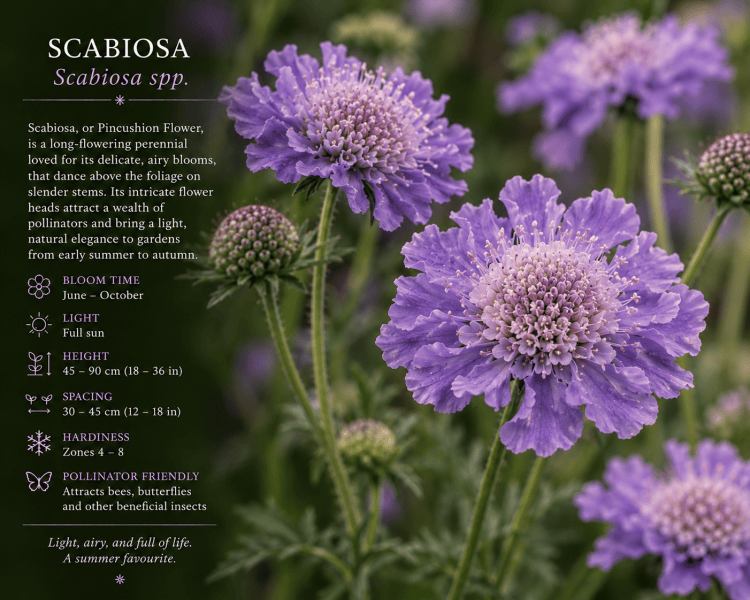
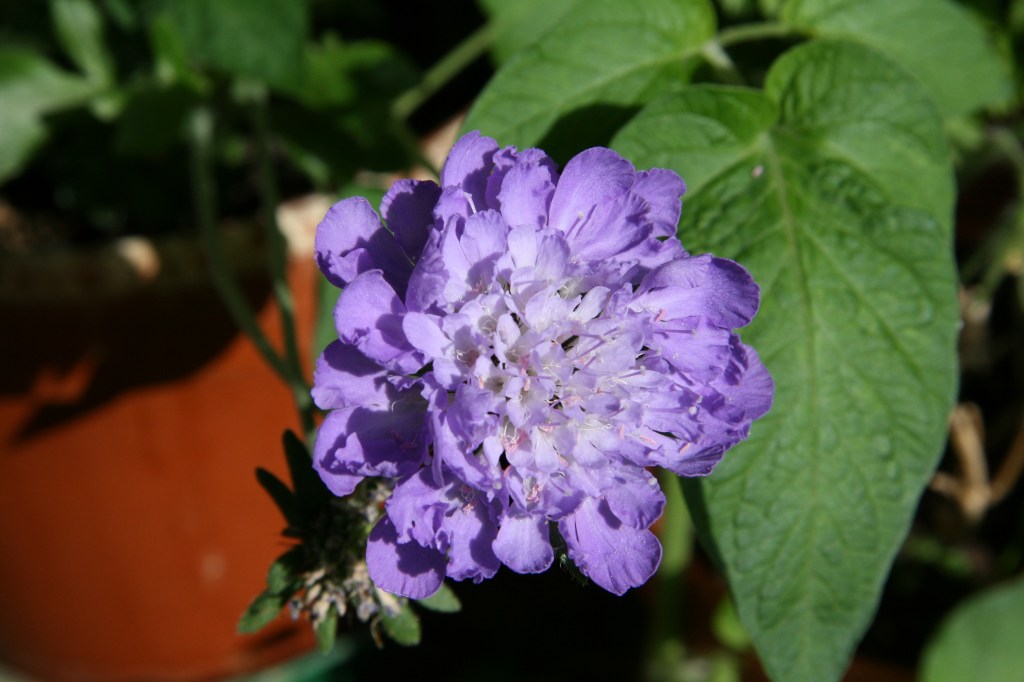
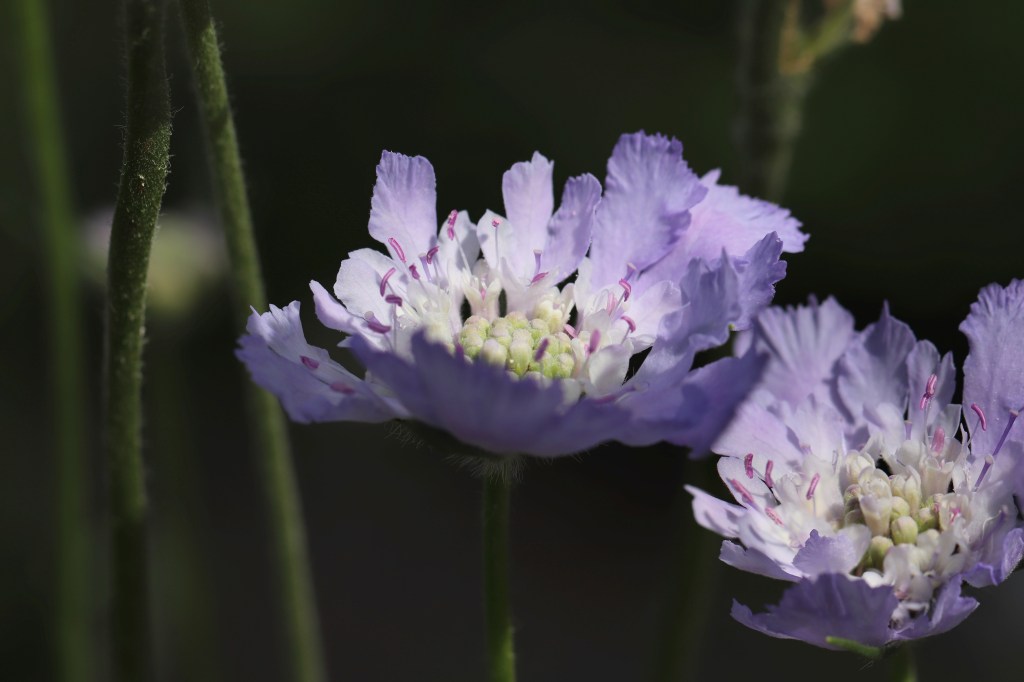
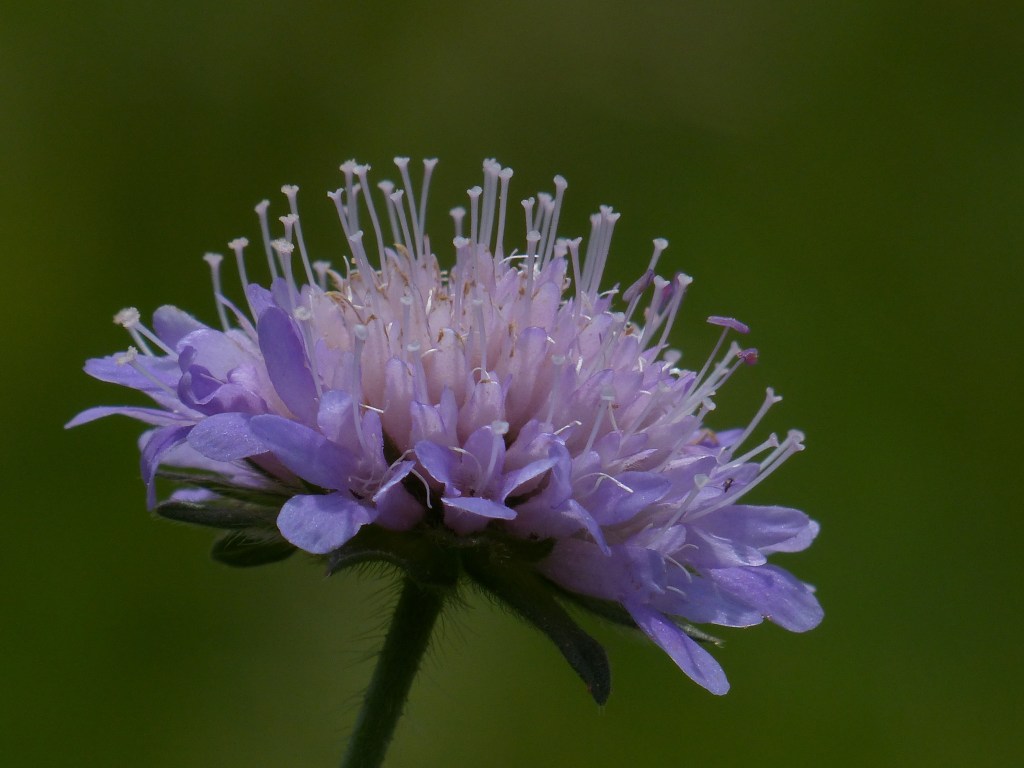
| Some plants look at their best when nothing is happening. Give them a still morning, good light and perhaps a convenient backdrop, and there they are, displaying themselves exactly as the catalogue promised. Others require movement before they make sense. Scabiosa belongs firmly in the second camp. A light breeze passes through the border, and those slender stems begin to move, the flowers nodding above everything around them as though they have somewhere else they ought to be. It is difficult to imagine Scabiosa behaving solemnly. Even the name pincushion flower, which describes the flower head rather well, makes it sound slightly domestic. Look closely, and there is considerable detail there: the outer petals forming a soft frill around a raised centre, often in shades of lavender, blue, pink or almost white. But stand back, and the detail disappears. What you notice instead is space. The flowers seem to hover rather than grow, held on stems so thin that the whole arrangement looks slightly improbable. That airiness is one of the reasons I like them. Gardens can become terribly solid if we’re not careful. We buy a plant, give it its allotted patch of soil and wait for it to fill the space, then repeat the exercise until there isn’t much space left at all. Scabiosa does something different. It occupies a border without blocking it. You can see through the stems to whatever is growing behind, which makes it particularly useful amongst grasses and looser perennials where movement matters as much as colour. There is another audience, of course, and they are rather less concerned with composition. On a warm day, Scabiosa can be extraordinarily busy with bees, hoverflies and butterflies. What we see as a pretty flower is, to them, somewhere to eat. That sounds obvious, but I think gardeners occasionally forget that the two purposes needn’t be separated. There is still a slightly peculiar idea that a wildlife garden must look wild, while an ornamental garden exists primarily for us. In reality, some of the most attractive plants we can grow are also amongst the most useful to insects. We don’t necessarily have to surrender the border to nettles to help a butterfly. Scabiosa makes the point rather elegantly. Give it sunshine and soil that doesn’t remain wet through winter, and it will generally reward you with a long flowering season. Regular deadheading helps enormously. It is one of those jobs that can feel faintly pointless while you’re doing it — wandering around removing individual faded flower heads — until a few weeks later when the plant is flowering again, and you remember why you bothered. Depending on the type, some Scabiosa are short-lived perennials. In contrast, others are annuals or biennials, so this isn’t necessarily a plant to put in the ground and assume you’ve dealt with that corner of the garden for the next twenty years. I don’t think that is a weakness. We tend to place enormous value on permanence in gardens. A plant that lasts for decades is considered dependable, while something shorter-lived can be dismissed as troublesome. Yet permanence isn’t always what a border needs. Plants come and go naturally, and allowing a few gaps to appear lets us make changes. Self-seeders move themselves around. Short-lived plants make room for others. The garden becomes a continuing conversation rather than a piece of furniture assembled once and left in position. There is something particularly appealing about watching Scabiosa later in the season, when the border has begun to lose some of its early-summer enthusiasm. The flowers keep appearing, sometimes only a handful at a time, held above foliage that may no longer be looking quite as fresh as it did in June. Bees are still finding them. Butterflies are still stopping. And the stems are still moving whenever the wind passes through. It isn’t spectacular in the conventional sense. You probably wouldn’t build an entire garden around one Scabiosa, and nobody is likely to gasp when they first encounter it. That may be precisely why it belongs in this series. Some plants are there to dominate a view. Others make the view better simply by being part of it. Perhaps we spend too much time asking whether a plant is beautiful and not quite enough asking what it is doing. Scabiosa provides colour without heaviness, movement without disorder, and food for insects without compromising the surrounding garden. It manages to be ornamental and useful without making a fuss about either. And on a warm afternoon, when one of those apparently weightless flowers is bending under the rather substantial weight of a bumblebee, it becomes difficult to decide whether we planted it for ourselves or for them. I’m not sure it matters. |
| About our writing & imagery Most articles reflect our real gardening experience and reflection. Some use AI in drafting or research, but never for voice or authority. Featured images may show our photos, original AI-generated visuals or, where stated, credited images shared by others. All content is shaped and edited by Earthly Comforts, expressing our own views. |

