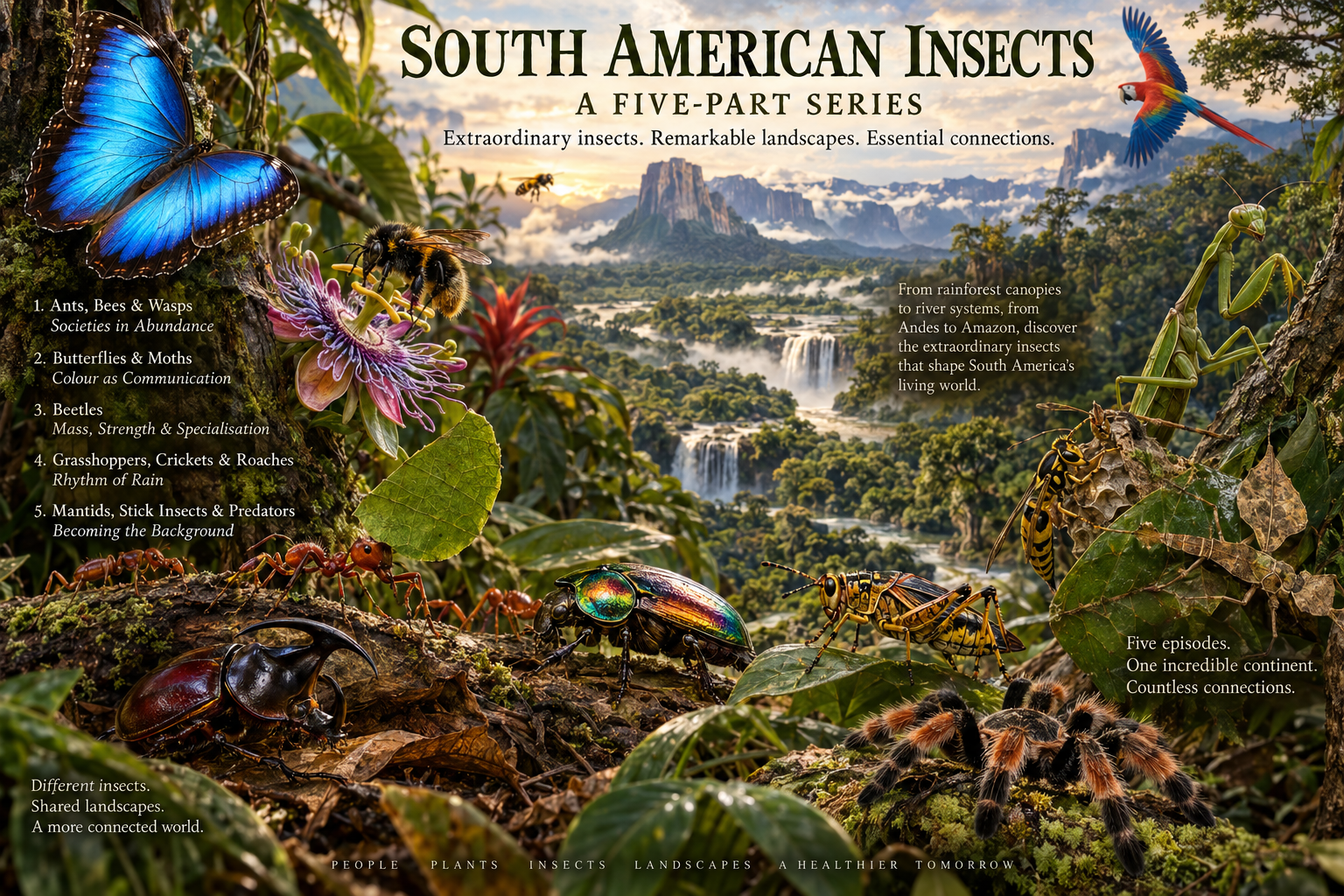
| A 5-Part Series |
| A curated exploration of South America’s most iconic, curious, and ecologically important insects |
| In parts of South America, insect life seems almost inseparable from the landscape itself. Insects are beneath the leaves, inside dead timber, moving along branches, feeding among flowers and travelling through the canopy far above us. At night another community takes over, replacing the movement and colour of daylight with sound, camouflage and creatures that can remain completely invisible until they decide to move. Much of this abundance is associated naturally with the great tropical forests, particularly the Amazon, but South America is far more varied than the familiar image of endless rainforest suggests. The continent includes the Andes, the enormous wetlands of the Pantanal, Atlantic forests, grasslands, dry forests, savannas and some of the driest landscapes on Earth. Each places different demands upon the insects living there. What particularly interests me is how specialised many of those solutions have become. Leafcutter ants do not simply collect food; they cultivate fungus underground. Army ants create moving disturbances through the forest that other animals deliberately follow. Butterflies communicate through colour, reflection and transparency, while moths can spend months developing only to live for a remarkably short period as adults. Beetles dismantle timber, dung, and other organic material, returning nutrients to systems that must recycle continuously. Then there are insects whose greatest achievement is barely being noticed. Mantids disappear among foliage, stick insects become branches, and predators wait almost motionless for opportunities to come within reach. Elsewhere, rain can transform apparently quiet ground into a landscape suddenly filled with grasshoppers, crickets and other insects responding to a brief period of abundance. It would be easy to treat all this as an exhibition of strange and spectacular creatures. South America certainly has enough of those. But that isn’t really what this series is about. As gardeners, we know that what matters in any living landscape is connection. Plants depend upon soil and decomposition; flowers depend upon pollinators; herbivorous insects become food for predators; dead vegetation is dismantled and eventually becomes part of new growth. South America allows us to see those familiar relationships operating at an extraordinary scale. Across these five episodes, we will follow ants, bees and wasps through their remarkable societies; butterflies and moths through colour and communication; beetles through strength, recycling and specialisation; grasshoppers, crickets and cockroaches through the rhythms of rainfall; and finally the mantids, stick insects and predators that survive by becoming almost indistinguishable from the world around them. Some will be beautiful. Some decidedly less so. A few are insects most of us would probably prefer not to discover unexpectedly inside our clothing. But each belongs somewhere within the larger system. And perhaps that is the most interesting thing about South America’s insects. The closer we look at individual creatures, the harder it becomes to see any of them as truly individual. They are parts of landscapes built upon relationships — millions of small lives collectively keeping some of the richest ecosystems on Earth moving. |
| About our writing & imagery Most articles reflect our real gardening experience and reflection. Some use AI in drafting or research, but never for voice or authority. Featured images may show our photos, original AI-generated visuals or, where stated, credited images shared by others. All content is shaped and edited by Earthly Comforts, expressing our own views. |


I just love the header image Rory! I just want to climb into it and walk around and take photos of all these gorgeous beauties! 😍❤️ There is so much beauty and fascination in the little creatures we so often overlook. I’m genuinely thankful that more people are taking the time to appreciate, learn about, and share these little wonders with the rest of us, like you are doing now. I so love these kind of posts! There will always be those who don’t understand their value, but thankfully, there are more of us connecting through this shared appreciation for the natural world. And that is a beautiful thing to see! Thanks for another stunning series that I can look forward to! 🙏 🌿🦋🐞
LikeLiked by 1 person