| Where memory meets evidence |
| Episode VIII Where Have All the Small Things Gone? The wildlife that disappeared without us noticing |
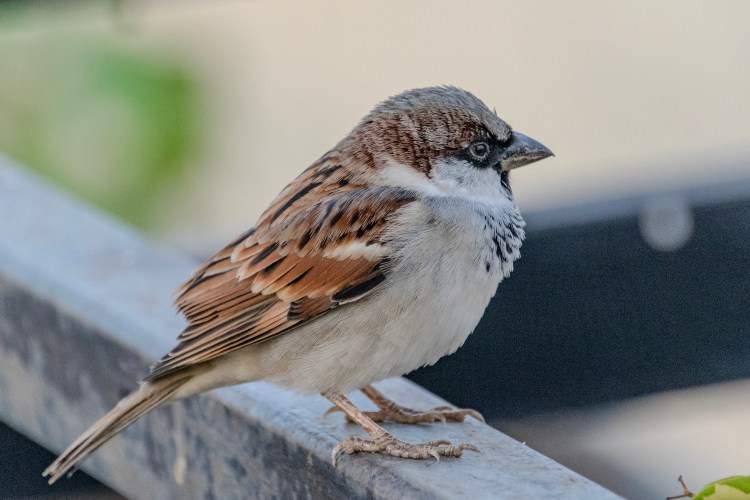
| I remember a sound from years ago that I don’t seem to hear very often now. It is the high, sharp whistle of a shrew. I mentioned this recently to somebody around my own age, almost in passing: where have all the shrews gone? It was one of those questions that arrives before you’ve really thought about it. Something that once seemed to belong in the background of life suddenly seems missing, and you cannot remember when you last noticed it. But my observation had a problem. When I looked into it, shrews hadn’t disappeared the way I had imagined. Britain’s shrews are protected, but the common shrew is not currently classified as endangered. Perhaps their behaviour has changed in some places, perhaps the places where I spend my time have changed, or perhaps I don’t hear them as frequently as I once did. Whatever the explanation, my memory wasn’t enough to prove what I initially thought it did. That might seem an unfortunate way to begin an article about disappearing wildlife, but I think it is probably the right one. Throughout this Within Living Memory series, I have been interested in the relationship between what we remember and what we can demonstrate. Memory matters, particularly when it belongs to somebody who has spent much of their life observing the natural world, but memory isn’t evidence on its own. It gives us somewhere to start looking. Sometimes the evidence supports what we remember, sometimes it modifies it, and occasionally it tells us we were simply wrong. When it comes to the wildlife around us, unfortunately, much of the evidence suggests that the feeling many of us have — that there used to be more of it — isn’t entirely nostalgia. When abundance was ordinary My childhood was unusual because I spent much of the 1960s and 70s moving between Australia and Malaysia before returning permanently to Britain in 1977. Those places gave me very different versions of the natural world, but one thing I remember about all of them was abundance. Life seemed everywhere, particularly insects, although I have to be careful here because I was also the sort of child who actively went looking for them. If you spend your afternoons turning things over, looking beneath stones and wandering through bush or tropical vegetation, you are inevitably going to see more wildlife than somebody sitting indoors. Malaysia gave me praying mantises, stick insects, butterflies, beetles, spiders and frogs around the monsoon drains. Australia gave me bull ants, cicadas, caterpillars, beetles, spiders and all the other small things I could find in the bush. I caught things, watched things and kept ant farms and bug farms. I was fascinated by insects, and looking back I am sometimes surprised that I didn’t follow that interest into a career. Life rarely follows such a neat route. What fascinates you at ten doesn’t necessarily decide what you will be doing at thirty, although in my case animals eventually returned to the centre of my working life when I became involved professionally with exotic livestock. During my childhood, nobody was counting the ordinary things. I wasn’t recording how many butterflies I saw during an afternoon or how many moths appeared around a light. Why would I have? They were there. That, I think, is one of the problems with abundance: when something is everywhere, we rarely imagine a future in which it won’t be. Nobody looks at a garden full of sparrows and thinks we had better count them because one day there might be considerably fewer. The same applies to something many people of my generation remember from cars. I remember insects splattered across windscreens and headlights after journeys in Australia, Malaysia and Britain. It wasn’t regarded as an ecological observation; it was something that needed cleaning off the car. Today people sometimes refer to the apparent reduction in this as the windscreen phenomenon. Taken alone, the memory proves little because cars, roads, speeds, and aerodynamics have all changed, but it becomes more interesting when placed alongside decades of insect monitoring. Butterflies are particularly useful because Britain has unusually good long-term records. The overall picture since the 1970s is one of substantial decline, although not every species has followed the same path and some have expanded their ranges. Moths show a similarly complicated but troubling pattern, with significant declines recorded among many widespread species. That sits rather uncomfortably beside my memory of outside lights attracting considerably more moths than I generally see gathering around them today. The important point isn’t that my childhood recollections prove the scientific records correct. It is the other way around. The records allow me to ask whether the changes I think I have noticed are real. The creatures between the headlines Conservation understandably draws our attention towards animals in obvious danger. It has to. A species approaching extinction deserves urgent attention, but I sometimes wonder whether this focus makes us overlook something equally unsettling: the gradual reduction of creatures once so ordinary that nobody thought of them as wildlife worth worrying about. A tiger disappearing matters. So does a sparrow. When I think about the birds around me now, the house sparrow is one I notice particularly. Thrushes, starlings and cuckoos also seem less obvious to me than they once did. Again, I have to separate observation from proof, but in several of these cases long-term monitoring supports the broader memory. Britain’s bird populations have changed enormously during my lifetime, and house sparrows and starlings have suffered particularly substantial losses. At the same time, other birds have recovered. Birds of prey offer wonderful examples of what can happen when persecution is reduced, and conservation is given the chance to work. That matters because I don’t want to write an article suggesting that everything was wonderful fifty years ago and everything is disappearing now. Nature doesn’t work like that. Populations rise and fall, species expand into new areas, others retreat, and conservation can reverse declines that once appeared almost inevitable. Climate change is altering ranges and behaviour as well, so a species becoming more noticeable doesn’t necessarily mean the wider ecosystem is healthier. Even so, if I could restore one ordinary creature to the abundance I remember from childhood, I think I might choose the house sparrow. Not because it is more important than everything else, but precisely because it was so unremarkable. Sparrows belonged around us. They occupied streets, hedges, gardens and rooftops and were part of the noise of everyday life. You didn’t stop what you were doing because you’d seen a sparrow. You barely looked twice, and perhaps that is why the disappearance of abundance can be so difficult to recognise. The water vole I didn’t know I was losing. Another animal takes me directly back to childhood: the water vole. I remember seeing them when I went fishing as a boy. At the time they were simply part of being beside water, and I certainly wasn’t standing there contemplating their future conservation status. Today, water voles are classified as endangered in Great Britain, having declined enormously since the 1970s through habitat loss and degradation, along with predation by introduced American mink. That memory affects me differently than it does for the shrews. With the shrew, my observation made me ask a question, and the evidence didn’t support my initial assumption that their apparent absence meant they were endangered. With the water vole, something I remember as an ordinary part of childhood really has suffered a catastrophic decline. Both examples are important because if I only included memories that proved me right, Within Living Memory would become an exercise in finding evidence to confirm what I already believed. I am much more interested in finding out whether what I remember stands up. Sometimes it does, and sometimes it doesn’t. Neither result makes observation pointless—quite the opposite. Observation starts the conversation, but it shouldn’t be allowed to finish it. What gardeners see Becoming a professional gardener in 2022 gave me another way of looking at all this because I now spend much of my working life moving between gardens. Across more than eighty gardens, you begin to notice how differently relatively small pieces of land can behave. Some are tremendously alive. Others can feel strangely sterile, although I don’t encounter quite as many completely sterile gardens as discussions about modern gardening sometimes suggest. It isn’t as simple as tidy garden versus untidy garden either. A beautifully maintained garden can support considerable biodiversity, just as a neglected garden isn’t automatically a wildlife paradise. The problem begins when tidiness becomes so complete that the garden’s ecological structure disappears with it. Remove every fallen leaf, clear every corner, cut everything back, pave large areas, replace living lawns with artificial surfaces and treat every unfamiliar insect as something requiring chemical warfare. Eventually, wildlife has little left to use. What disappears isn’t merely the creature we notice. Shelter goes. Pollinators lose feeding opportunities. Soil health can deteriorate. Nesting and overwintering places vanish, and the connections that let small creatures move through a landscape break down. A good wildlife garden works because, however loosely, it copies some of the complexity of a natural ecosystem. It offers different layers and opportunities: food, shelter, water, breeding places, and somewhere to disappear when a gardener is watching. That doesn’t require surrendering the garden to wilderness. This is one of those gardening assumptions I think deserves challenging. Wildlife gardening doesn’t have to mean abandoning aesthetics, any more than a manicured garden has to be biologically dead. The interesting gardens are often those where the two ideas meet: places that are clearly cared for but where the gardener has accepted that other creatures are also trying to live there. I see clients increasingly interested in that idea, although certainly not all of them. Some people primarily want their gardens to look immaculate, and that is their choice. As a professional gardener, I can advise, explain and demonstrate, but ultimately it is their garden. Because I move between so many different spaces, I can notice the consequences of different approaches. Nature isn’t standing still. There is another complication. Wildlife isn’t simply becoming less abundant; in many cases it is behaving differently. I see insects active at times of year that feel increasingly unusual. Bumblebees can appear earlier and remain active later. Plants flower outside the periods we instinctively associate with them, and the seasonal relationships between flowering, insects, temperature, rainfall, feeding and breeding are being altered. Climate change doesn’t mean every species moves uniformly towards extinction. Ecological systems are far too complicated for that. Some species decline while others expand their ranges. Some adapt surprisingly well to human environments, while others depend upon very particular conditions and struggle when those conditions change. Predators can recover spectacularly when conservation succeeds. New species can appear in places where older generations would rarely or never have encountered them. This is another reason I resist turning my childhood into some ecological Garden of Eden. It wasn’t. Habitats were already being destroyed, pesticides were being used, pollution existed, and human development had been transforming landscapes for generations. Indeed, the photographs from my Australian childhood that we explored in the previous episode show houses being built into landscapes that had previously supported considerably more bush. What we lacked wasn’t an understanding of environmental impact. We often lacked an understanding of where the cumulative impact might eventually lead. Perhaps children look differently. There is also an uncomfortable question I have to ask myself: did I really see more wildlife because there was more wildlife, or did I see more because I was a child? Children fascinated by insects spend time doing things most adults don’t. They turn over logs, peer beneath stones, watch ants, poke around ponds and disappear into vegetation. I did all of those things, so perhaps a man in his sixties inevitably encounters fewer beetles than the boy who actively spent his afternoons hunting for them. I think there is truth in that, and it would be dishonest to ignore it. Yet it cannot explain everything because we now have long-term records demonstrating genuine declines in many of the creatures people of my generation remember as abundant. Memory and evidence don’t have to compete. Sometimes they arrive at broadly the same destination by completely different routes. What worries me more now is whether children are getting enough opportunities to create those memories in the first place. My parents allowed me considerable freedom around nature. Australia had bushland close enough to explore; Malaysia had tropical vegetation and monsoon drains. I went looking for things, got dirty, encountered animals, and learned through experience that the natural world wasn’t something that existed exclusively in books, zoos, or television documentaries. It was outside the door. Modern parenting has changed for many understandable reasons, and I wouldn’t pretend every childhood of the 1960s and 70s was idyllic or safe. But I do wonder what is lost when children have less unsupervised contact with ordinary nature. Knowing what a frog, beetle or caterpillar looks like on a screen isn’t quite the same as finding one unexpectedly beneath something you’ve just turned over. Perhaps conservation eventually depends upon that distinction. It is easier to care about something when you have actually met it. The danger of noticing too late Humans are very good at noticing dramatic change. If a large tree falls, everybody sees the gap. If a pond dries completely, we notice. If a species is declared extinct, it becomes news. What we seem considerably worse at recognising is gradual subtraction: slightly fewer moths around the outside light, fewer sparrows in the hedge, fewer frogs in a pond, or a butterfly that once seemed ordinary becoming something you are genuinely pleased to encounter. No single moment announces that abundance has become scarcity. That is perhaps why the small things matter so much. They reveal environmental change not necessarily as one enormous catastrophe but as thousands of tiny absences accumulating across years and decades. Eventually somebody looks around and asks a question as simple as mine: where have all the shrews gone? Sometimes the answer will be that they haven’t gone at all. Sometimes we were looking in the wrong place, remembering imperfectly or comparing two environments that were never equivalent. But sometimes the answer is considerably more troubling. The creature has really declined, the habitat has really disappeared, or something once commonplace has genuinely become scarce. I cannot identify the year when I first realised the natural world around me seemed less populated than the one I remembered. There wasn’t one. Perhaps that is the point. The change was gradual enough to become normal as it happened. If I could take a ten-year-old child from 2026 and put them into an ordinary afternoon from my childhood, I wouldn’t take them to a zoo or national park. I wouldn’t need to. I would let them do what I did: wander outside, turn things over, look beneath stones, listen, get dirty and see what moved. I suspect what might surprise them wouldn’t be one extraordinary animal but the accumulation of ordinary life around them — insects, birds, beetles, butterflies, spiders, caterpillars, frogs and all those other creatures occupying the untidy spaces between human activity. Perhaps they would be surprised by something else too: nobody around them thought this abundance remarkable. That is why I keep returning to the house sparrow. We didn’t consider ourselves privileged to see one. It was a sparrow. The same applies to so much of the wildlife I remember. We weren’t consciously witnessing an age of abundance because abundance was simply the baseline against which everything else was measured. And that raises one of conservation’s more uncomfortable ideas. Every generation begins with the natural world it inherits and tends to regard that as normal. A child born today cannot personally remember the insects on a windscreen in 1975, the water voles beside a fishing spot or a garden apparently overflowing with sparrows. Their starting point is whatever remains now. Fifty years from today, their memories will become somebody else’s comparison. That is why memory still matters, despite all its faults. It cannot replace monitoring, surveys or scientific evidence, but it can preserve the question that might otherwise never be asked. It can tell us that something feels different and invite us to find out whether it really is. My shrews reminded me not to trust memory blindly. The water voles reminded me not to dismiss it either. Somewhere between those two things is perhaps the real purpose of Within Living Memory: to remember what was once ordinary, check what actually happened and, where we still have the opportunity, pay rather more attention to what remains. Because perhaps the reason so many of us failed to notice the small things disappearing was terribly simple. They were just so utterly abundant. |
| About our writing & imagery Most articles are grounded in our real gardening experience, observations and reflections. AI may assist with research, drafting and editing, but the experiences, opinions and editorial direction are our own. Featured images may include our photography, original AI-generated visuals or, where stated, images credited to others. All published content is reviewed and shaped by Earthly Comforts before publication. |


Rory, this is such a beautiful and thought-provoking piece. ❤️
I think one of the saddest things about the gradual disappearance of wildlife is that we often don’t notice what we’re losing until something that was once commonplace becomes a rare sight. We become so accustomed to seeing the little things around us that we forget how extraordinary they really are.
As someone who loves photographing nature, I’ve always been fascinated by the smaller creatures that many people overlook. A spider weaving its web, a tiny insect resting on a leaf, or a moth visiting the garden can offer so much to observe and appreciate if we simply take the time to look.
I particularly liked your honesty in questioning your own memories and comparing them with the evidence. There’s a valuable lesson in that: our memories can prompt us to ask questions, but we must remain willing to learn what the evidence tells us.
Your point about children experiencing nature for themselves also resonated with me. There’s something special about discovering a living creature in its own little world, rather than merely seeing it on a screen. Those encounters can spark a curiosity and affection for nature that stay with us for a lifetime.
Perhaps we need to pay more attention to the ordinary things while they’re still ordinary, because they may be far more precious than we realise. Thank you for reminding us to look a little closer, Rory. 🌿❤️
LikeLiked by 1 person
Suze’s grandchildren live in Australia, and when they first moved as a family out to Oz in 2015, when they came back for a visit [Suze’s daughter] in 2018 – the children were adraid of insects and Suze’s daughter explained she didn’t let the kids explore nature by themselves as it was so dangerous – there is no denying Australian wildlife holds dangers – but if we do not let children explore, then we are allowing children to grow up in fear of the little things – if they don’t see things now, they will not have the respects for creatures when they age and become older. That’s the saddest part. Sonel the world we have grown up with and in is/was a very different world to theirs – we did things as kids, we stayed out late, drank from hosepipes, you know all the old memes l refer to, we were allowed to be children and enjoy life.
LikeLiked by 1 person
I agree with you, Rory. ❤️ There’s a big difference between teaching children to respect nature and teaching them to fear it. Of course, children need to learn about the dangers and how to behave around wildlife, but that shouldn’t mean keeping them away from every little creature.
Some of my happiest memories of nature come from simply being outdoors, observing things and discovering little wonders that other people might walk straight past. And as you know, I still do that with my Canon today! 🤣📸
I think when children are given the opportunity to explore safely, ask questions and learn about the creatures around them, they’re more likely to grow up appreciating them rather than automatically seeing them as something to fear.
And you’re right about childhood being different now. We can’t recreate everything about the world we grew up in, but surely we can still give children the freedom to be curious, get their hands dirty and discover the magic of the natural world. 🌿🦋❤️
LikeLiked by 1 person
Today’s parenting is very different from yesterday’s, Sonel. Here in the UK, I often find myself watching parents a third or even half my age and wondering, do you actually know how to parent?
I regularly see parents walking their children to school, with the youngsters straggling behind while Mum or Dad is engrossed in scrolling through their phone, barely acknowledging their child’s presence, let alone watching what they’re doing. And these aren’t isolated incidents. In fact, the minority are parents who genuinely engage with their children, talk to them, and take an interest in what they have to say.
Of course, disengaged parenting isn’t new, although smartphones certainly are. Parents have always walked their children to school without saying much or acknowledging their presence. The difference, at least from what I observe, is that they once seemed to be the minority, whereas today the opposite appears to be true.
And I find that rather sad.
If parenting is becoming increasingly distracted and less engaged, is it really surprising that some children are growing up with fewer opportunities for meaningful stimulation, conversation and interaction? After all, children learn so much about the world through the attention, guidance and everyday engagement they receive from the adults around them.
LikeLiked by 1 person
I agree with you, Rory. ❤️ I think there’s a big difference between being physically present with a child and actually being engaged with them. Some of the most meaningful learning happens in those ordinary, everyday moments when a parent takes the time to talk, listen, answer questions, or simply share in a child’s curiosity about the world.
Children are naturally curious, and so much of how they learn about life comes from those little interactions with the adults around them. A conversation on the way to school might seem insignificant to a busy parent, but to a child, it can be an opportunity to learn, feel heard, and understand the world a little better.
Of course, parenting has never been easy, and every generation has its own challenges. Smartphones aren’t necessarily the problem in themselves, but when a screen constantly takes priority over the person standing right beside us, I think something valuable can be lost.
Sometimes the simplest thing we can give a child is our attention. It costs nothing, yet it can mean so much. ❤️
LikeLiked by 1 person
This … “Sometimes the simplest thing we can give a child is our attention. It costs nothing, yet it can mean so much”
So need to say any more as this is everything.
Well said.
LikeLiked by 1 person