| 100 Remarkable Species from Around the Globe |
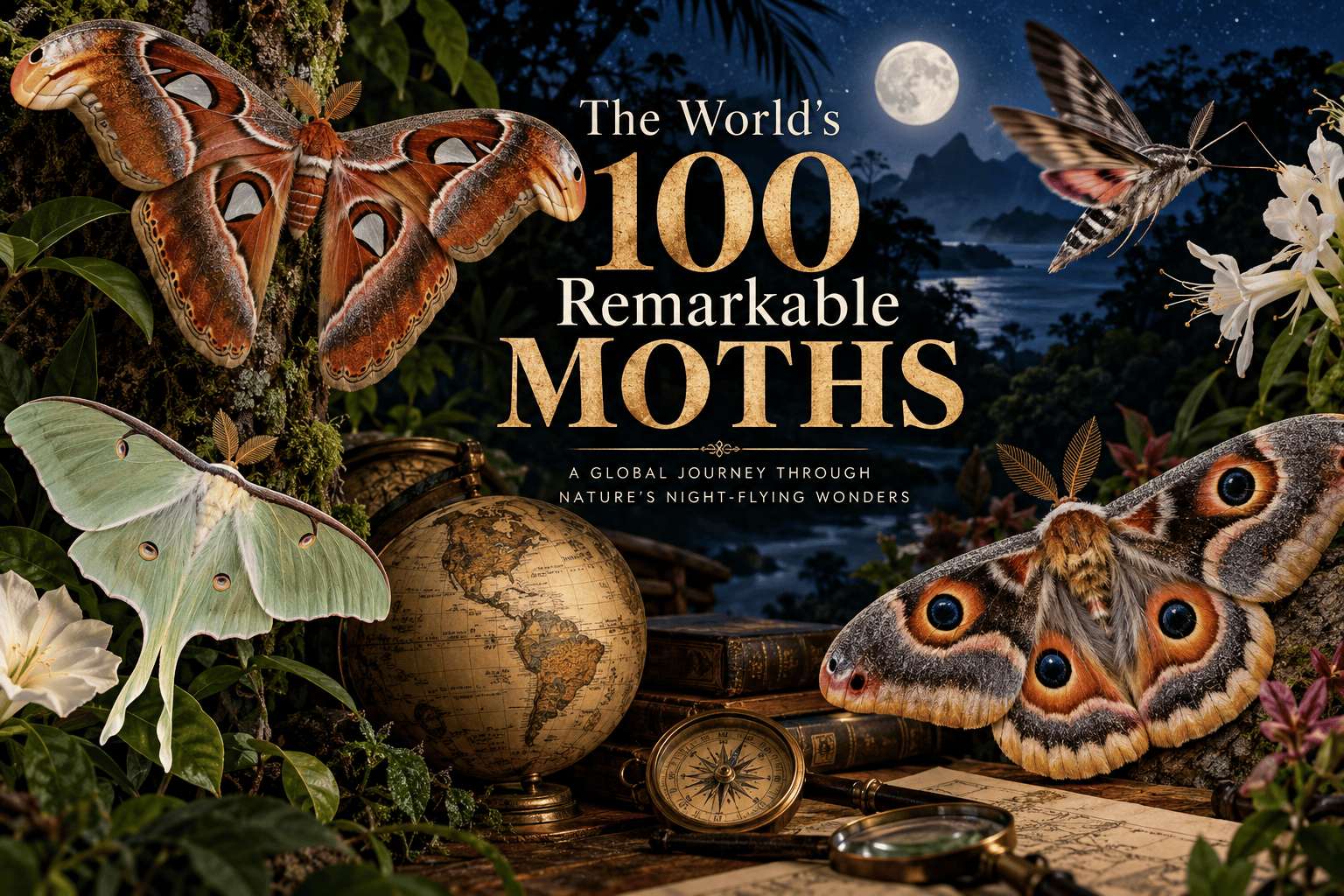
| Moths have earned a reputation that feels rather unfair. Butterflies are welcomed into gardens, photographed on flowers and celebrated for their beauty, while moths are frequently regarded as their rather dull, nocturnal relatives. For many people, the word moth conjures images of small brown insects fluttering around a porch light or, worse still, something that makes holes in a favourite woollen jumper. Yet the reality could hardly be more different. Moths belong to one of the most extraordinary and diverse groups of insects on Earth, with well over 150,000 species described by science and many more undoubtedly waiting to be discovered. They inhabit almost every conceivable environment, from tropical rainforests and temperate woodlands to deserts, mountain slopes and even the colder regions of the world. Some are enormous, others almost microscopic, and their extraordinary variety of shapes, colours and behaviours makes the familiar garden moth seem only the beginning of a much larger story. Consider the magnificent Atlas moth, whose enormous wings resemble the patterned fabric of an elaborate oriental tapestry, or the Madagascan sunset moth, whose dazzling iridescent colours would put many butterflies to shame. Elsewhere, moths resemble dead leaves, species whose markings imitate the faces of much larger animals, and others whose remarkable relationships with particular plants have developed over millions of years of evolution. Not all moths are creatures of darkness, either. Some fly in brilliant sunshine, visiting flowers alongside bees and butterflies, while others hover in front of blossoms with such precision that they might easily be mistaken for tiny hummingbirds. Their caterpillars can be equally remarkable, displaying elaborate disguises, extraordinary defensive adaptations and feeding relationships that connect them intimately with the landscapes they inhabit. For gardeners, moths are particularly worthy of attention. Many species are important pollinators, especially during the evening and overnight, when the familiar daytime visitors have largely retired. Their caterpillars also provide an essential food source for birds and other wildlife, making moths a vital part of the complicated ecological relationships that sustain healthy gardens and natural habitats. And yet, despite their importance, many moths remain largely unnoticed. We may admire a butterfly crossing a summer border without giving a second thought to the remarkable insects moving through the same garden after sunset. Perhaps that is part of their fascination. They inhabit a world that exists alongside our own, often living beyond the limits of our everyday observations. The World’s 100 Remarkable Moths invites you to explore that overlooked world. Across fifty episodes, we will meet one hundred carefully selected moth species from around the globe, examining two in each instalment. Some will be chosen for their extraordinary appearance, others for their unusual behaviour, evolutionary adaptations, ecological importance or remarkable natural histories. We will encounter giants and miniatures, masters of disguise, unexpected pollinators and species whose very existence challenges our assumptions about what a moth should look like. This is not intended to be a scientific ranking of the world’s finest moths. Nature rarely lends itself to such straightforward comparisons, and beauty alone is a poor measure of what makes a living creature remarkable. Instead, the series will celebrate diversity, curiosity, and the countless ways evolution has shaped these extraordinary insects. We will travel between continents, explore unfamiliar habitats and occasionally return to species that might be living much closer to home than we realise. Along the way, we’ll consider the challenges moths face, from habitat destruction and artificial lighting to changing conditions affecting insect populations around the world. Above all, this is a series about looking again at creatures we may have overlooked for far too long. The next time a moth appears at your window, settles quietly beneath a garden leaf or circles a light on a warm summer evening, perhaps it will deserve a little more attention. Behind those delicate wings may lie a story every bit as remarkable as anything found in the more celebrated corners of the natural world. With 100 extraordinary species waiting to be discovered, we have quite a journey ahead of us. |
| Series Inspired by My Teddy Bear Moth: A Little Mystery Solved |
| Wander through the Article Directory and see where curiosity takes you next. |
| About our writing & imagery Most articles reflect our real gardening experience and reflection. Some use AI in drafting or research, but never for voice or authority. Featured images may show our photos, original AI-generated visuals, or, where stated, credited images shared by others. All content is shaped and edited by Earthly Comforts, expressing our own views. |

