| Notes from the garden on food, resilience, and the years ahead |
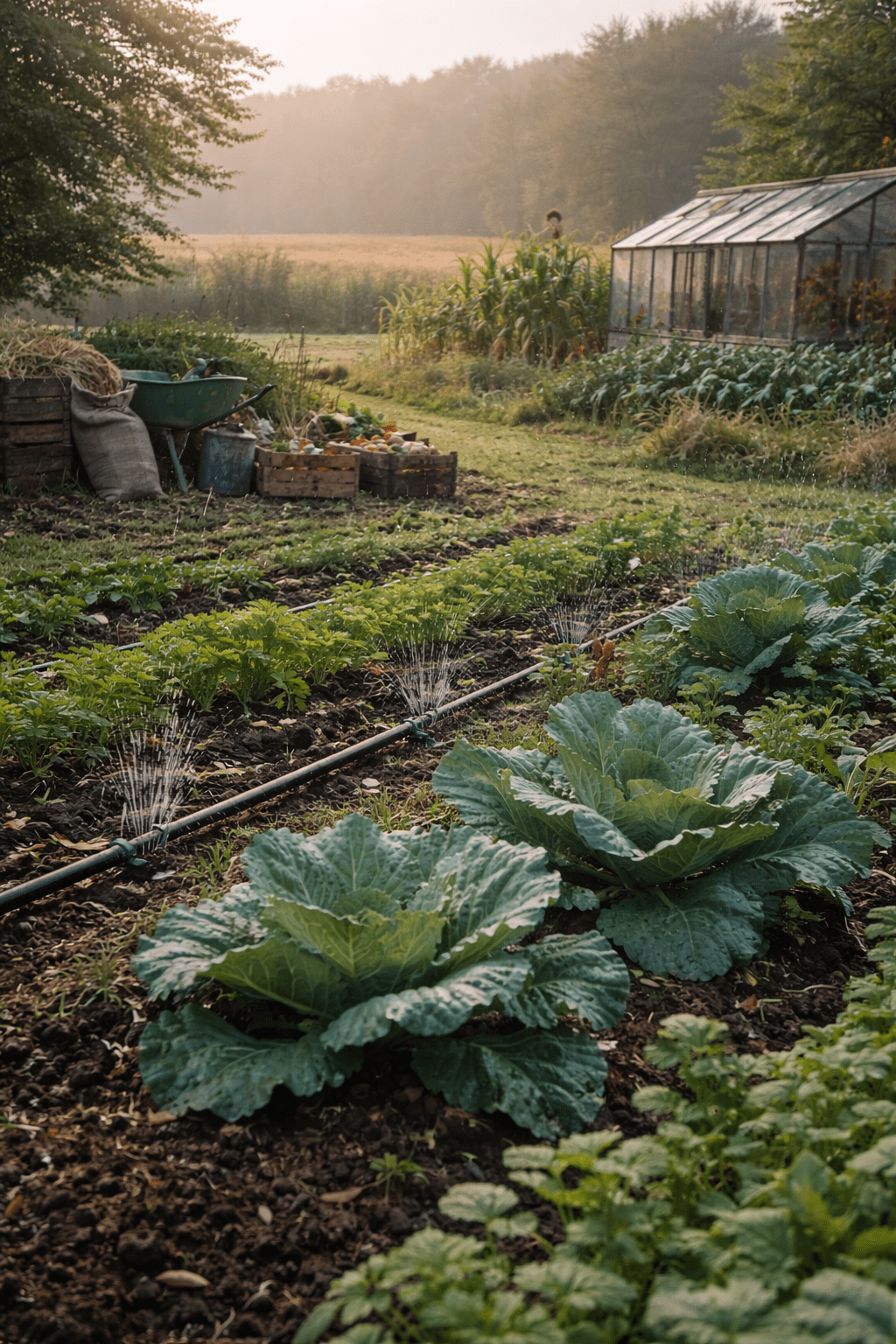
| Food Is Not a Product, It’s a System It’s easy to think of food as a product because that’s how we usually meet it. It arrives packaged, priced, and labelled. It sits on shelves under lights. It is compared, substituted, and discounted. In that form, food behaves like any other consumer good: available or unavailable, affordable or not, preferred or replaced. But the longer you work in a garden, the harder it is to maintain that illusion. Food refuses to behave like a product once you pay attention to how it actually comes into being. It is not made; it emerges. It is not assembled; it grows. And it does so inside a web of conditions that cannot be separated without consequence. The trouble we’re running into now isn’t that food systems are failing. It’s that we spent decades pretending food wasn’t a system at all. The system was always there — we just didn’t have to see it. Every carrot is the result of soil structure, microbial life, moisture, temperature, seed quality, timing, labour, and a stretch of decent weather. Remove one element, and the carrot becomes smaller, misshapen, late, or absent. Gardening teaches this quickly because nothing is hidden. If the soil is tired, you see it. If the weather turns, you feel it. If you misjudge timing, the plant doesn’t politely compensate. Industrial food systems didn’t remove these dependencies. They obscured them. Fertiliser replaced soil fertility. Fossil fuels replaced timber. Refrigeration replaced seasonality. Cheap transport replaced proximity. For a long time, that worked well enough that the system faded into the background. Food became something you selected, not something you negotiated with. What’s changing now is that the background is moving forward again. When one part tightens, everything else responds. One of the internet myths worth gently setting aside is the idea that food shortages or disruptions are caused by single failures. A bad harvest. A shipping problem. A policy decision. In reality, food systems behave more like gardens than factories. Stress in one area shifts pressure to other areas. If energy costs rise, fertiliser becomes expensive. If fertiliser use drops, yields soften. If yields soften, prices rise. If prices rise, diets shift. If diets shift, demand patterns change, sometimes creating new pressure points. Gardens do this on a smaller scale. Poor soil leads to weak growth. Weak growth attracts pests. Pest damage stresses the plant further. The plant becomes less resilient to weather. What began as a soil issue ends as a crop failure. The lesson isn’t that systems are fragile. It’s that they are responsive. They redistribute strain rather than absorb it cleanly. That responsiveness is now visible to consumers for the first time in a long while. Control works locally, not universally. There’s a strong temptation to believe that better management, smarter technology, or more data can fully stabilise food systems. And to an extent, those things help. Gardens improve with attention. Systems benefit from care. But gardening also teaches the limits of optimisation. You can improve soil year on year and still lose crops to an unseasonal frost. You can choose resilient varieties and still be undone by prolonged drought. Control exists, but it is always partial. Large-scale food systems face the same limits, only multiplied. The more complex the system, the more pathways stress can travel along. Efficiency increases output, but it reduces slack. When conditions are stable, that’s an advantage. When conditions shift, it becomes a vulnerability. The problem isn’t that food systems are badly designed. It’s that they were designed for a world that stayed still. Gardens never assume that. Products encourage entitlement; systems demand participation. Thinking of food as a product encourages a certain relationship. You expect it to meet your preferences. If it doesn’t, something has gone wrong. Thinking of food as a system encourages a different posture. You expect variability. You adapt. You substitute. You adjust timing and expectation. Neither approach is morally superior. They simply belong to different contexts. What’s uncomfortable for many people now is that the context has changed faster than the mindset. Food still looks like a product, but increasingly behaves like a system. That mismatch creates frustration. People feel let down without knowing why. They sense instability but can’t locate its source. Gardeners are spared some of that confusion because they already live inside systems. They expect outcomes to be conditional. They know success is negotiated, not guaranteed. Systems thinking doesn’t mean self-sufficiency. Another misconception that often appears at this point is the idea that recognising food as a system requires total independence. Grow everything. Source everything locally. Remove yourself from markets altogether. That’s neither realistic nor necessary. Gardens don’t make people self-sufficient; they make them system-literate. They teach where effort matters and where it doesn’t. They show which parts of the process are sensitive and which are robust. A gardener doesn’t panic when a crop fails. They note it. They adjust next year. They diversify. Food systems benefit from the same approach. Diversity of sources. Acceptance of partial failure. Redundancy where possible. Flexibility rather than precision. Seeing food as a system doesn’t mean withdrawing from it. It means engaging with it honestly. Why this matters now As climate patterns shift, energy costs fluctuate, and labour becomes less predictable, food will continue to behave less like a fixed product and more like the ecological process it always was. This doesn’t automatically mean less food. It means less certainty. More variation. More visible effort. Those changes are easier to live with if you understand what you’re seeing. A system under strain doesn’t announce collapse. It signals adjustment. Prices move. Availability shifts. Choice narrows, then widens elsewhere. Gardens prepare you for this because they never offer clean narratives. They teach you to read signs rather than demand guarantees. Learning to look properly The most useful skill in the years ahead won’t be prediction. It will be an interpretation. Being able to look at what’s changing — in gardens, shops, seasons — and understand it as system behaviour rather than personal inconvenience makes a surprising difference to how unsettling it feels. Food is not failing us. It’s reminding us what it has always been. Once you see that, a lot of the anxiety loosens its grip. What replaces it is attentiveness. And that, inconvenient as it may be, turns out to be manageable. Gardeners have been practising it all along. |
| About our writing & imagery Many of our articles are written by us, drawing on real experience, reflection, and practical work in gardens and places we know. Some pieces are developed with the assistance of AI as a drafting and research tool. Featured images may include our own photography, original AI-generated imagery, or—where noted—images kindly shared by other creators and credited accordingly (for example, via Pixabay). All content is shaped, edited, and published by Earthly Comforts, and the views expressed are our own. |


Interesting and educational post, Rory.
LikeLiked by 1 person
Thank you Eugenia.
LikeLiked by 1 person
You’re welcome, Rory.
LikeLiked by 1 person